"3D for the Inner Child” – An Interview with Daria Anise
by LED.ART EDITORIAL
"3D for the Inner Child” – An Interview with Daria Anise
by LED.ART EDITORIAL
A world where procedural systems and warm emotion coexist.
CG artist and 3D motion designer Daria Anis delicately explores deeply human themes—memory, emotion, and innocence—through Houdini, a highly logical tool.
Although her work is created through technology, it always reaches the viewer through feeling first.
In this interview, we trace her journey to becoming a 3D media artist, delve into the sources of her inspiration, and explore her unique philosophy of “technology for the inner child.”
1. Please introduce yourself briefly.
My name is Daria Anise. I’m a CG artist, 3D motion designer, and look dev.
2. What led you to become a 3D media artist?
My dad works in IT, and my mom is very creative. They got married, and I appeared: a computer artist!
I hold an MS in Design IT, and for over 10 years I’ve worked in production as a 3D Artist, Senior Houdini Artist, Lead Artist, and Art Director across different studios.
A couple of years ago, I began creating personal artworks just for myself, outside of client work.
3. Where do you usually find inspiration for your work?
I find inspiration in other art fields: painting, architecture, interiors, fashion, ceramics. And also, in my own experience. For example, I have a “Childhood” series where I use imagery from my memories. Here, at LED.ART I've learned about a lot of amazing artists, and they inspire me too.
4. Are there any artists or works that you consider role models or find particularly impactful? Why?
I love Henri Matisse. His bright colors and patterns have inspired me since I first learned about him in art school during art history class.
5. What tools or software do you mainly use in your creative process?
I mainly use Houdini. I love its logic: that you can change any element at any moment, and its procedural nature. I enjoy building logical systems.
6. Is there a particular message or emotion you hope to convey through your work?
My message is: "Let 3d technologies serve our inner children"
7. Among your own works, which one are you most attached to and why?
I'm attached to my piece “Shiba”, it’s a portrait of my own dog Poring.
8. What has been your greatest challenge as an artist, and how did you overcome it?
I always wanted to find my own style, and for years I suffered, trying different things and guessing what people might like. Then I realized I should simply relax and create what I enjoy. And from all the people in the world, those who resonate with my work will naturally find it. After I let go and started creating for pleasure, my social media grew quickly, and I found many like-minded people and recognition.
9. Could you share any memorable experiences from exhibitions, collaborations, or awards?
Once, as part of the Diorama Studio team, I worked on videos for Benetton. They had a campaign where dogs and humans wore matching puffer jackets. My role was grooming and look development. It was a very cute project, even though it was technically challenging. After that project, I fell in love with hair, and it inspired my whole “Dogs” series.
10. Are there any trends or changes in the digital art scene that you’re currently paying attention to?
I like the trend toward sincerity and the growing focus on the artist’s personality and creative process. With the rise of generative AI, I feel that context, intention and the small human details in artwork are becoming more meaningful and more appreciated.
11. Is there anything you hope to see from LED.ART in the future, or any role you’d like it to play?
I hope our collaboration continues and grows, so I can dedicate more time to free creative work.
12. What are your upcoming plans or artistic goals?
I want to continue doing what I’m doing now, and in the future, I’d love to move from digital into physical space, creating installations and mixed-media experiences that combine my 3D art with physical objects.
Daria Anise’s work is a language of pure emotion built upon complex technology.
By choosing to create for her own joy rather than for expectations, she found not only her style but also a community that deeply resonates with her vision.
Now, her gaze extends beyond the digital into physical space—toward installations and mixed-media experiences.
Wherever her work moves next, it will remain grounded in the delicate balance between technology and sincere emotion.


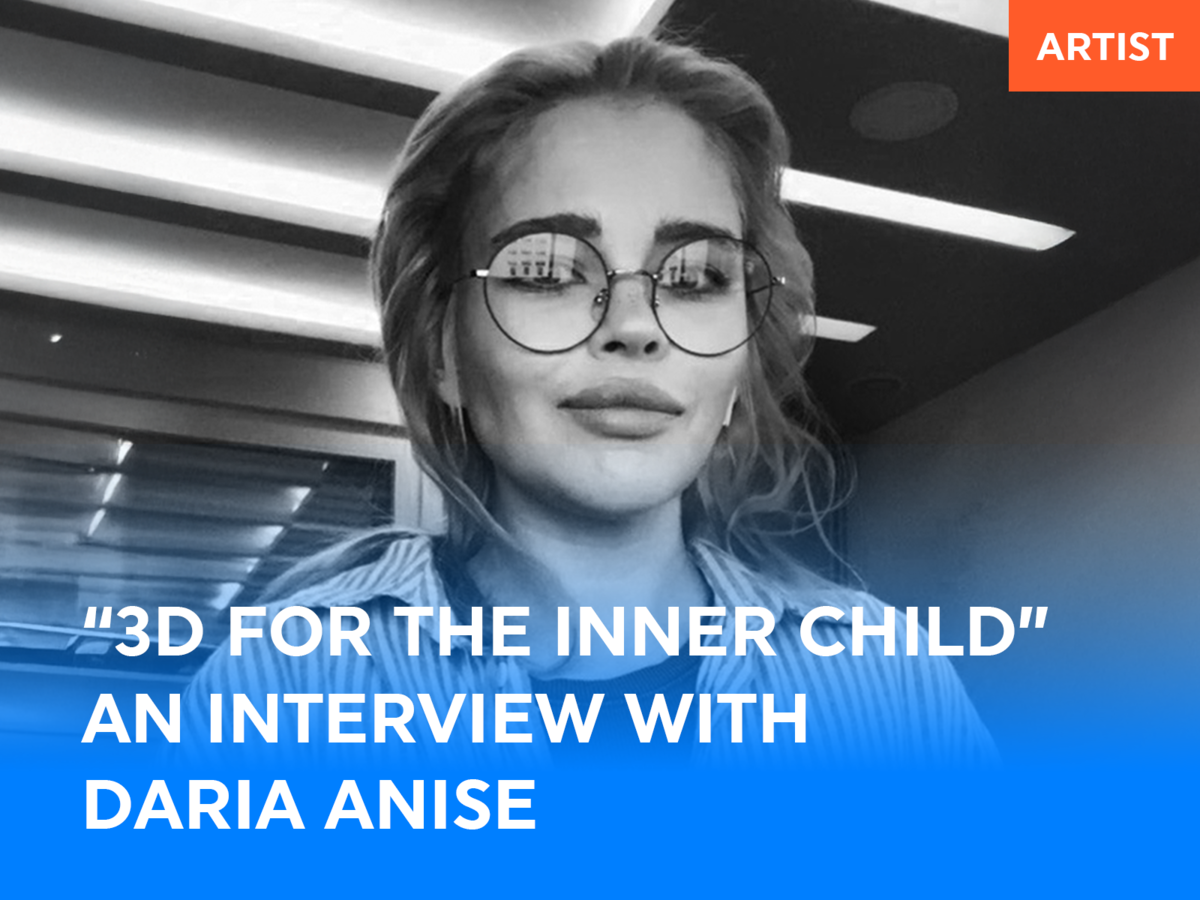

"3D for the Inner Child” – An Interview with Daria Anise
by LED.ART EDITORIAL
A world where procedural systems and warm emotion coexist.
CG artist and 3D motion designer Daria Anis delicately explores deeply human themes—memory, emotion, and innocence—through Houdini, a highly logical tool.
Although her work is created through technology, it always reaches the viewer through feeling first.
In this interview, we trace her journey to becoming a 3D media artist, delve into the sources of her inspiration, and explore her unique philosophy of “technology for the inner child.”
1. Please introduce yourself briefly.
My name is Daria Anise. I’m a CG artist, 3D motion designer, and look dev.
2. What led you to become a 3D media artist?
My dad works in IT, and my mom is very creative. They got married, and I appeared: a computer artist!
I hold an MS in Design IT, and for over 10 years I’ve worked in production as a 3D Artist, Senior Houdini Artist, Lead Artist, and Art Director across different studios.
A couple of years ago, I began creating personal artworks just for myself, outside of client work.
3. Where do you usually find inspiration for your work?
I find inspiration in other art fields: painting, architecture, interiors, fashion, ceramics. And also, in my own experience. For example, I have a “Childhood” series where I use imagery from my memories. Here, at LED.ART I've learned about a lot of amazing artists, and they inspire me too.
4. Are there any artists or works that you consider role models or find particularly impactful? Why?
I love Henri Matisse. His bright colors and patterns have inspired me since I first learned about him in art school during art history class.
5. What tools or software do you mainly use in your creative process?
I mainly use Houdini. I love its logic: that you can change any element at any moment, and its procedural nature. I enjoy building logical systems.
6. Is there a particular message or emotion you hope to convey through your work?
My message is: "Let 3d technologies serve our inner children"
7. Among your own works, which one are you most attached to and why?
I'm attached to my piece “Shiba”, it’s a portrait of my own dog Poring.
8. What has been your greatest challenge as an artist, and how did you overcome it?
I always wanted to find my own style, and for years I suffered, trying different things and guessing what people might like. Then I realized I should simply relax and create what I enjoy. And from all the people in the world, those who resonate with my work will naturally find it. After I let go and started creating for pleasure, my social media grew quickly, and I found many like-minded people and recognition.
9. Could you share any memorable experiences from exhibitions, collaborations, or awards?
Once, as part of the Diorama Studio team, I worked on videos for Benetton. They had a campaign where dogs and humans wore matching puffer jackets. My role was grooming and look development. It was a very cute project, even though it was technically challenging. After that project, I fell in love with hair, and it inspired my whole “Dogs” series.
10. Are there any trends or changes in the digital art scene that you’re currently paying attention to?
I like the trend toward sincerity and the growing focus on the artist’s personality and creative process. With the rise of generative AI, I feel that context, intention and the small human details in artwork are becoming more meaningful and more appreciated.
11. Is there anything you hope to see from LED.ART in the future, or any role you’d like it to play?
I hope our collaboration continues and grows, so I can dedicate more time to free creative work.
12. What are your upcoming plans or artistic goals?
I want to continue doing what I’m doing now, and in the future, I’d love to move from digital into physical space, creating installations and mixed-media experiences that combine my 3D art with physical objects.
Daria Anise’s work is a language of pure emotion built upon complex technology.
By choosing to create for her own joy rather than for expectations, she found not only her style but also a community that deeply resonates with her vision.
Now, her gaze extends beyond the digital into physical space—toward installations and mixed-media experiences.
Wherever her work moves next, it will remain grounded in the delicate balance between technology and sincere emotion.