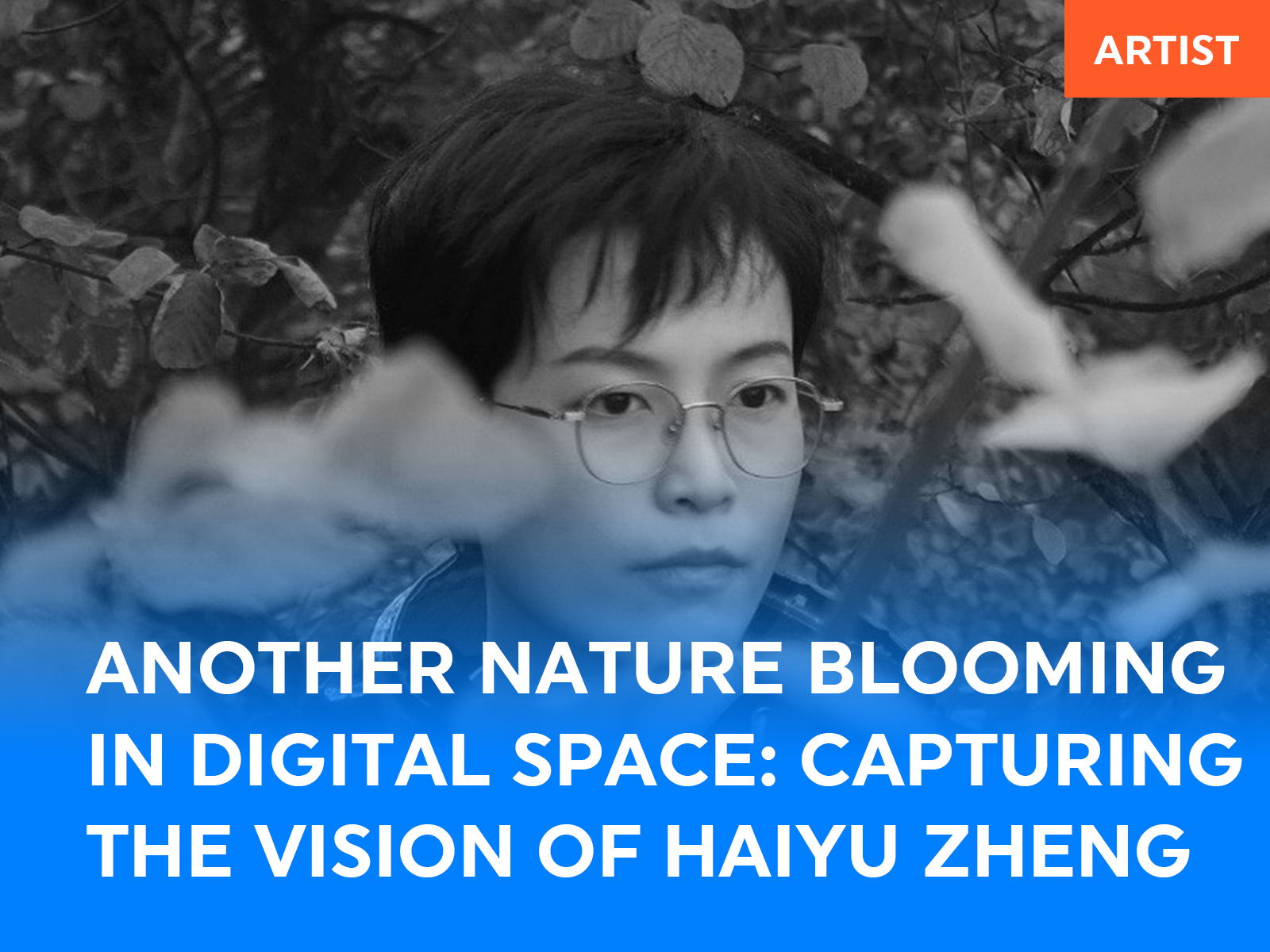
Another Nature Blooming in Digital Space
: Capturing the Vision of Haiyu Zheng
by LED.ART EDITORIAL
Haiyu Zheng is a visual artist who creates immersive sensory landscapes through 3D and motion, working at the intersection where the tangible textures and materiality of the physical world overlap with digital perception. Drawing from forms and surfaces found in nature, her works unfold through soft, dreamlike movements that blur the boundary between reality and imagination. Through bold colors and fluid motion, her art invites viewers to move beyond static imagery and experience digital scenes as something felt rather than simply seen.
After founding Zork Art Studio, Haiyu Zheng has expanded her artistic language across a wide range of spaces and media through collaborations with global brands such as Mercedes-Benz and Salomon. Her works have been showcased in major cities around the world, including Singapore, Hamburg, Paris, and Shanghai, earning international recognition for her distinctive approach.
In this edition of the magazine, we speak with Haiyu Zheng about how she understands the relationship between nature and the digital realm, and how movement and color become essential tools through which she conveys sensory and emotional depth.
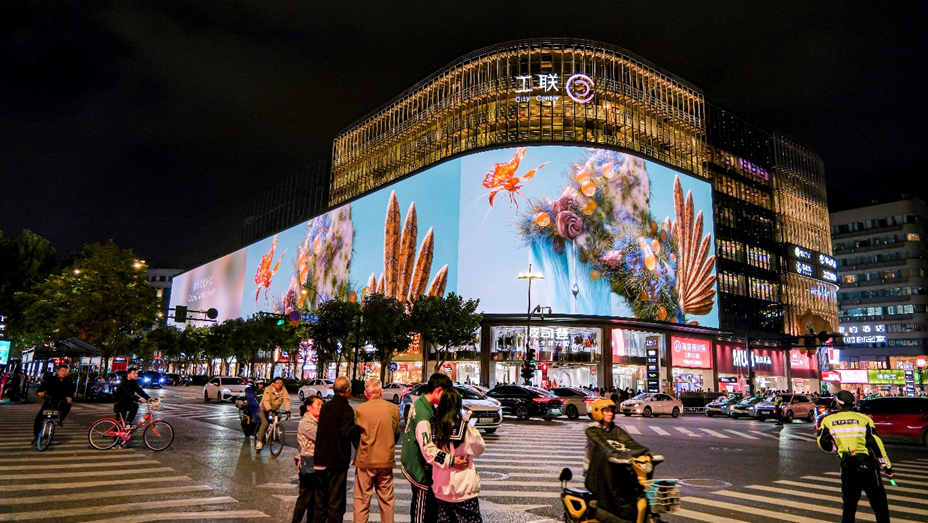
Haiyu Zheng Exhibition photo by Haiyu zheng
Q1. Please briefly introduce yourself.
A1. Hello, I’m a 3D artist working around the concept of “virtual nature systems.” My practice explores digital lifeforms, ecological evolution, and relationships of multispecies coexistence. By combining CG animation with ecological aesthetics, I create landscapes that exist somewhere between reality and imagination. Through my work, I hope to move beyond a human-centered perspective and invite viewers to reconnect with the flow of life, the rhythms of nature, and the emotional resonance embedded within ecological relationships.
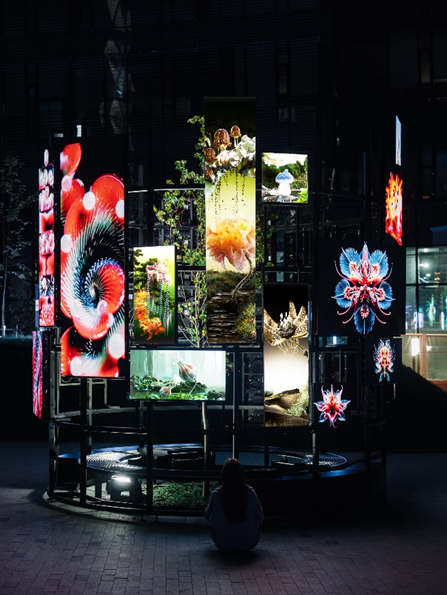 Haiyu Zheng Exhibition photo by Haiyu zheng
Q2. What led you to become a 3D media artist?
A2. During my undergraduate studies, I found the process of bringing imagined ideas to life through digital tools incredibly exciting. The freedom to create worlds and lifeforms that could never exist in reality felt especially compelling to me. That experience motivated me to teach myself various software tools, and what began as small experiments gradually evolved into the artistic practice I continue today.
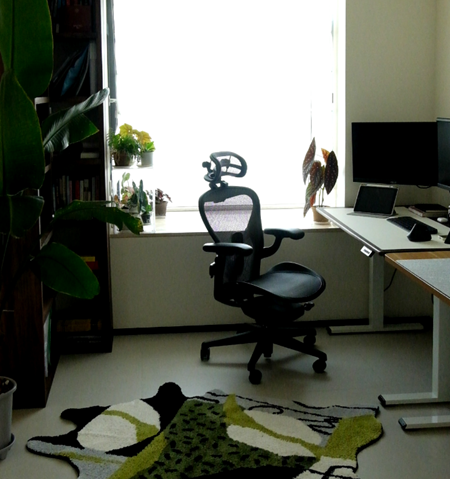
Haiyu Zheng’s workspace photo by Haiyu zheng
Q3. Where do you usually find inspiration for your work?
A3. I go hiking quite often. Being in nature helps me feel grounded, and it’s where I find the most inspiration. I’m particularly drawn to subtle flows of energy in forest environments—the light filtering through trees, the texture of moss, and the forms of mushrooms and wildflowers. I often photograph these moments and later reinterpret them digitally, especially focusing on forest plants, as a way to express the quiet beauty I experience in nature.
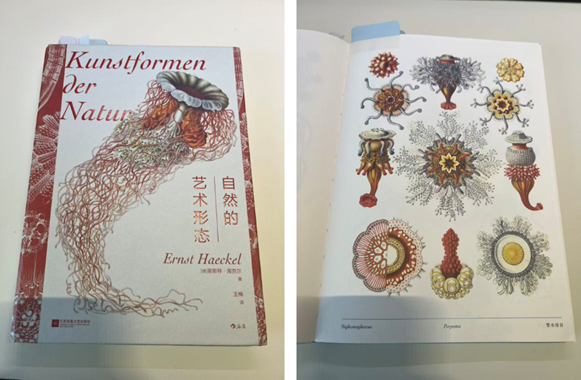 Sources of Inspiration photo by Haiyu zheng
Q4. Are there any artists who have influenced or inspired you?
A4. I greatly admire the work of Six N. Five. Their visuals capture the essence of nature in such a pure and refined way, and whenever I look at their work, I feel a sense of calm and clarity. I’m especially inspired by how they convey atmosphere and emotion through simple compositions, and it often makes me reflect on how I want to evoke similar feelings through my own work.
Q5. What tools or software do you mainly use in your creative process?
A5. I primarily use Cinema 4D and Octane Render for modeling and rendering. Recently, I’ve also been incorporating Houdini into my workflow to create more complex simulations and animations. Each tool comes with its own challenges, but I enjoy learning how they expand the visual language within my work.
Q6. Is there a particular message you hope to convey through your work?
A6. Through my work, I hope people can feel emotionally closer to nature. It’s almost like reconnecting with something familiar that may have been forgotten over time. I want to convey a sense of connection with the non-human life forms we coexist with, and to highlight that beauty can be found even in the small, easily overlooked elements within ecological systems.
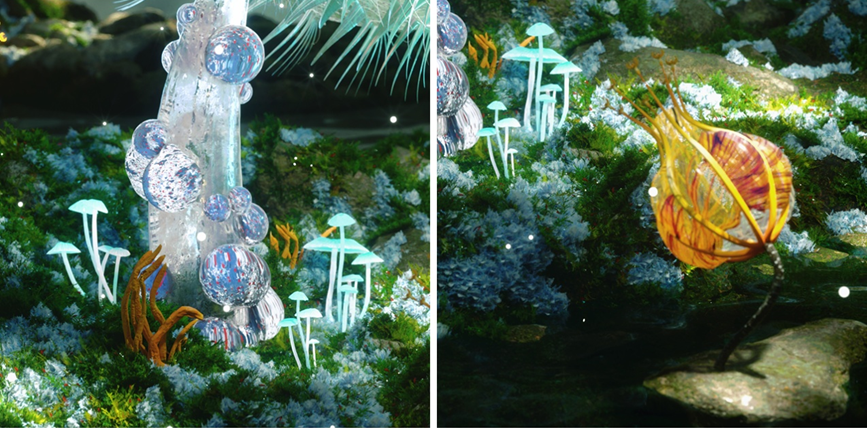
TRANSLUCENT by Haiyu zheng
Q7. Among your works, is there a project you feel particularly attached to?
A7. The Virtual Nature Study series is the project I feel most deeply connected to. It has been an ongoing exploration for about three years, beginning with familiar forms found in nature and evolving into the design of lifeforms and plant species that don’t exist in reality, yet feel entirely plausible.
Through this series, I explore relationships between nature and life, imagining how different beings might live, move, and interact within their environments. Based on these ideas, I create new forms and movements for digital organisms, gradually building my own visual language for digital life.
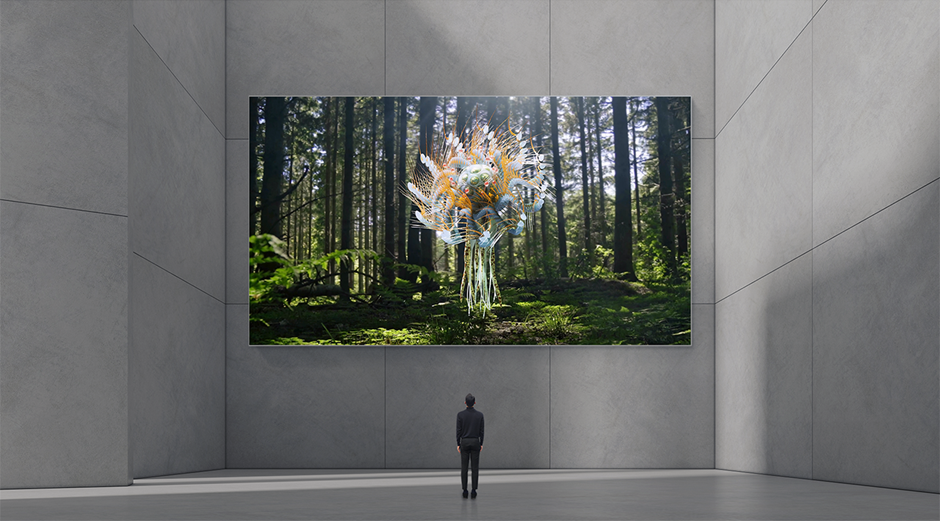
DANCING IN THE WILDNESS by Haiyu zheng
Q9 Are there any exhibitions, collaborations, or awards that stand out as particularly memorable?
A9. One especially meaningful experience was when the Virtual Nature Study series received the Gold Award at the CDSA International Media Art Competition, hosted by the China Academy of Art. At the time, the works were showcased on landmark screens across 14 cities worldwide. Seeing my digital ecosystems realized on such a large scale and connecting with audiences across different regions remains an unforgettable moment for me.
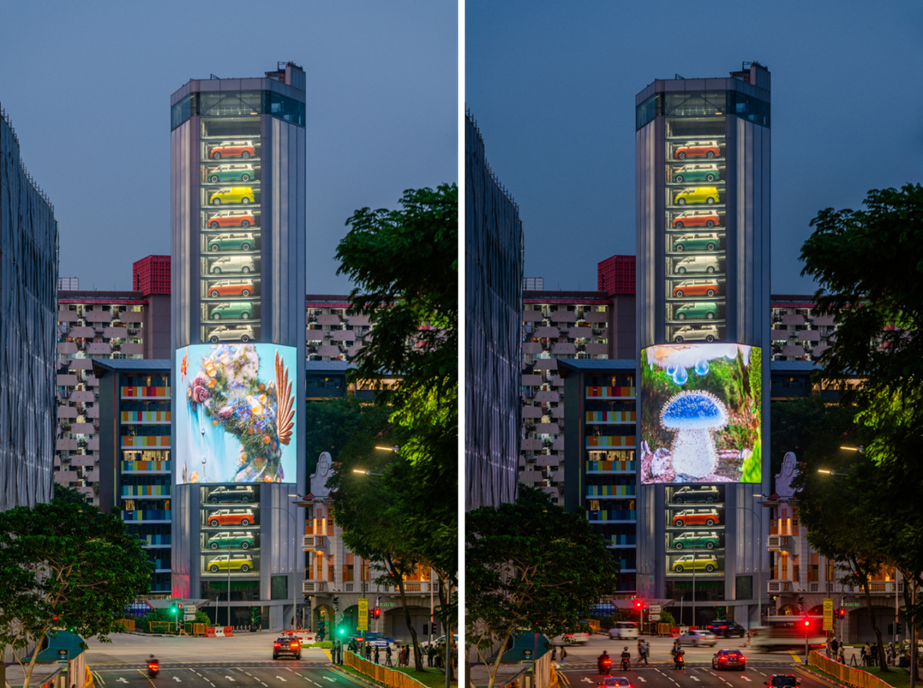
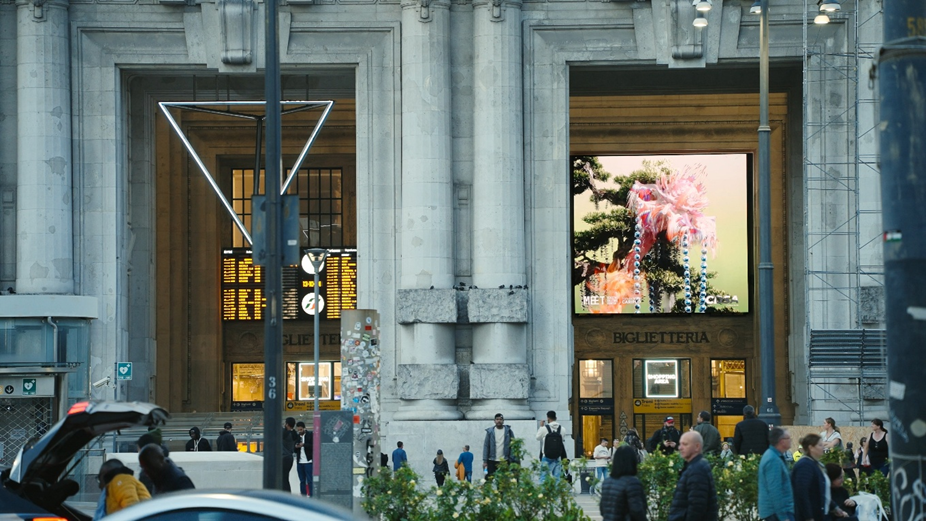
Hayu Zheng Exhibition photo by Haiyu zheng
Q10. Are there any trends or changes in the digital art scene that you are currently paying attention to?
A10. Without a doubt, AI represents the most significant shift right now. I don’t see AI as something artists should fear. Instead, I actively incorporate it into my workflow, and it has been very helpful in terms of efficiency. I believe the future lies in embracing AI not as a replacement for creative intuition, but as a tool that supports and expands it.
Q11. What would you like to see from LED.ART in the future, or what role do you hope it will play?
A11. I hope LED.ART continues to showcase an even wider range of artists with diverse styles and backgrounds. It would also be wonderful to see more events or programs that encourage communication and exchange among artists. I believe platforms like LED.ART can play an important role in supporting the growth of the digital art community.
Q12. Could you share your upcoming plans or artistic goals?
A12. I hope to share my work with a broader audience and deepen the emotional connection between viewers and the natural world—both real and virtual. Ultimately, I want more people to experience the quiet beauty and poetic sensibility of the “digital nature” I continue to create.


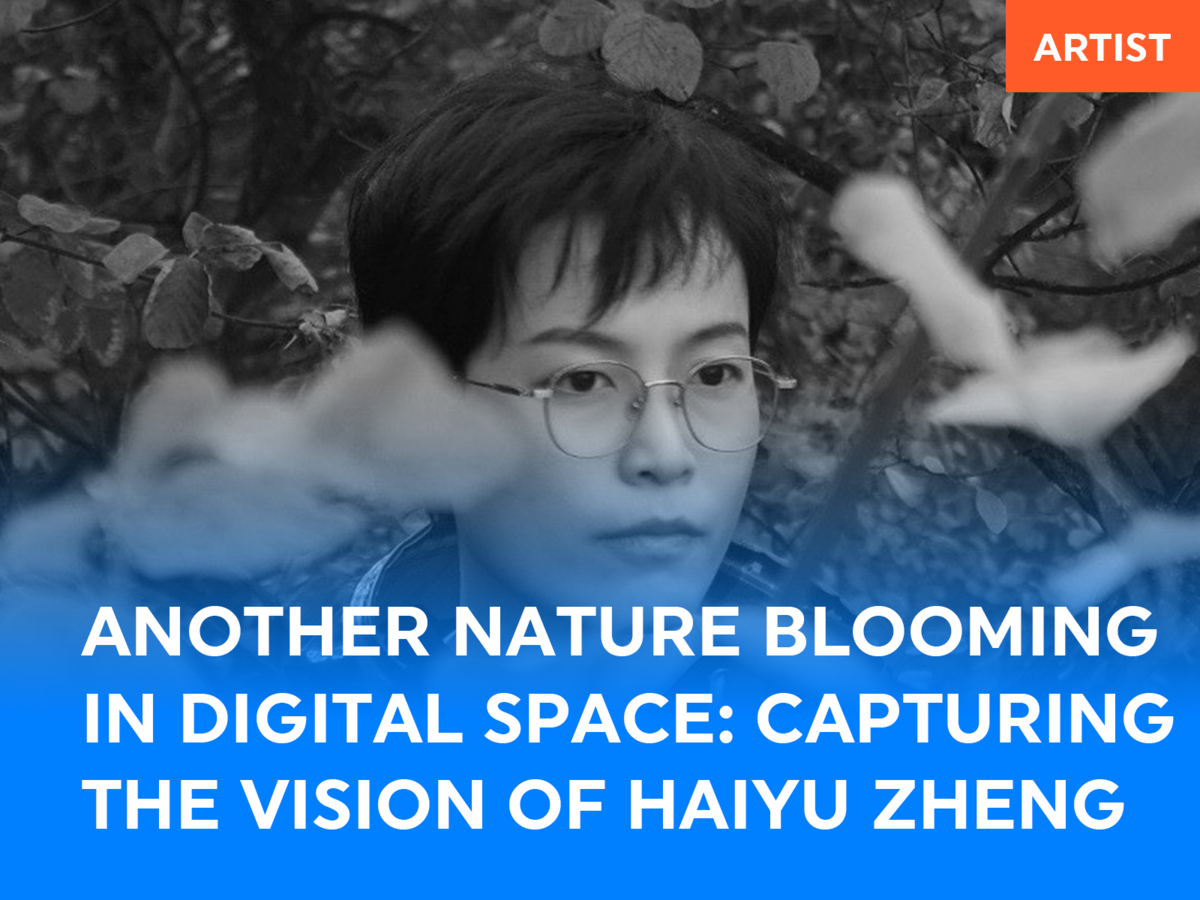

Another Nature Blooming in Digital Space
: Capturing the Vision of Haiyu Zheng
by LED.ART EDITORIAL
Haiyu Zheng is a visual artist who creates immersive sensory landscapes through 3D and motion, working at the intersection where the tangible textures and materiality of the physical world overlap with digital perception. Drawing from forms and surfaces found in nature, her works unfold through soft, dreamlike movements that blur the boundary between reality and imagination. Through bold colors and fluid motion, her art invites viewers to move beyond static imagery and experience digital scenes as something felt rather than simply seen.
After founding Zork Art Studio, Haiyu Zheng has expanded her artistic language across a wide range of spaces and media through collaborations with global brands such as Mercedes-Benz and Salomon. Her works have been showcased in major cities around the world, including Singapore, Hamburg, Paris, and Shanghai, earning international recognition for her distinctive approach.
In this edition of the magazine, we speak with Haiyu Zheng about how she understands the relationship between nature and the digital realm, and how movement and color become essential tools through which she conveys sensory and emotional depth.
Haiyu Zheng Exhibition photo by Haiyu zheng
Q1. Please briefly introduce yourself.
A1. Hello, I’m a 3D artist working around the concept of “virtual nature systems.” My practice explores digital lifeforms, ecological evolution, and relationships of multispecies coexistence. By combining CG animation with ecological aesthetics, I create landscapes that exist somewhere between reality and imagination. Through my work, I hope to move beyond a human-centered perspective and invite viewers to reconnect with the flow of life, the rhythms of nature, and the emotional resonance embedded within ecological relationships.
Q2. What led you to become a 3D media artist?
A2. During my undergraduate studies, I found the process of bringing imagined ideas to life through digital tools incredibly exciting. The freedom to create worlds and lifeforms that could never exist in reality felt especially compelling to me. That experience motivated me to teach myself various software tools, and what began as small experiments gradually evolved into the artistic practice I continue today.
Haiyu Zheng’s workspace photo by Haiyu zheng
Q3. Where do you usually find inspiration for your work?
A3. I go hiking quite often. Being in nature helps me feel grounded, and it’s where I find the most inspiration. I’m particularly drawn to subtle flows of energy in forest environments—the light filtering through trees, the texture of moss, and the forms of mushrooms and wildflowers. I often photograph these moments and later reinterpret them digitally, especially focusing on forest plants, as a way to express the quiet beauty I experience in nature.
Q4. Are there any artists who have influenced or inspired you?
A4. I greatly admire the work of Six N. Five. Their visuals capture the essence of nature in such a pure and refined way, and whenever I look at their work, I feel a sense of calm and clarity. I’m especially inspired by how they convey atmosphere and emotion through simple compositions, and it often makes me reflect on how I want to evoke similar feelings through my own work.
Q5. What tools or software do you mainly use in your creative process?
A5. I primarily use Cinema 4D and Octane Render for modeling and rendering. Recently, I’ve also been incorporating Houdini into my workflow to create more complex simulations and animations. Each tool comes with its own challenges, but I enjoy learning how they expand the visual language within my work.
Q6. Is there a particular message you hope to convey through your work?
A6. Through my work, I hope people can feel emotionally closer to nature. It’s almost like reconnecting with something familiar that may have been forgotten over time. I want to convey a sense of connection with the non-human life forms we coexist with, and to highlight that beauty can be found even in the small, easily overlooked elements within ecological systems.
TRANSLUCENT by Haiyu zheng
Q7. Among your works, is there a project you feel particularly attached to?
A7. The Virtual Nature Study series is the project I feel most deeply connected to. It has been an ongoing exploration for about three years, beginning with familiar forms found in nature and evolving into the design of lifeforms and plant species that don’t exist in reality, yet feel entirely plausible.
Through this series, I explore relationships between nature and life, imagining how different beings might live, move, and interact within their environments. Based on these ideas, I create new forms and movements for digital organisms, gradually building my own visual language for digital life.
DANCING IN THE WILDNESS by Haiyu zheng
Q9 Are there any exhibitions, collaborations, or awards that stand out as particularly memorable?
A9. One especially meaningful experience was when the Virtual Nature Study series received the Gold Award at the CDSA International Media Art Competition, hosted by the China Academy of Art. At the time, the works were showcased on landmark screens across 14 cities worldwide. Seeing my digital ecosystems realized on such a large scale and connecting with audiences across different regions remains an unforgettable moment for me.
Hayu Zheng Exhibition photo by Haiyu zheng
Q10. Are there any trends or changes in the digital art scene that you are currently paying attention to?
A10. Without a doubt, AI represents the most significant shift right now. I don’t see AI as something artists should fear. Instead, I actively incorporate it into my workflow, and it has been very helpful in terms of efficiency. I believe the future lies in embracing AI not as a replacement for creative intuition, but as a tool that supports and expands it.
Q11. What would you like to see from LED.ART in the future, or what role do you hope it will play?
A11. I hope LED.ART continues to showcase an even wider range of artists with diverse styles and backgrounds. It would also be wonderful to see more events or programs that encourage communication and exchange among artists. I believe platforms like LED.ART can play an important role in supporting the growth of the digital art community.
Q12. Could you share your upcoming plans or artistic goals?
A12. I hope to share my work with a broader audience and deepen the emotional connection between viewers and the natural world—both real and virtual. Ultimately, I want more people to experience the quiet beauty and poetic sensibility of the “digital nature” I continue to create.