Between Structure and Chance
: The Generative Art of Andreas Nicolas Fischer
by LED.ART EDITORIAL
At the intersection of light and code, structure and chance, unfolds the world of Andreas Nicolas Fischer. Instead of drawing every frame, he builds systems and elevates the unpredictable flows they generate into works of art. Based in Berlin, Fischer invites viewers on a journey through rhythm, repetition, and abstraction—an experience that briefly shifts perception into another dimension. In this interview, we hear his voice directly, exploring the roots of his practice, the philosophy behind his process, and his vision of where digital art is heading.
[ VODI 01_V7 ] by Andreas Nicolas Fischer
1. Please introduce yourself briefly.
My name is Andreas Nicolas Fischer. I’m a media artist based in Berlin, working primarily with generative systems, 3D graphics, and software-based processes.
2. What led you to become a 3D media artist?
I’ve always been interested in visual expression and how to maintain creative freedom within a structured practice. I studied graphic design as a pragmatic entry point, but over time gravitated toward more experimental forms. Working in motion design and art direction early on gave me technical grounding, but I felt limited creatively. Discovering generative art and the ability to build systems that produce outcomes rather than define every frame manually was a turning point. It allowed me to merge aesthetics with code and let unpredictability into the process.
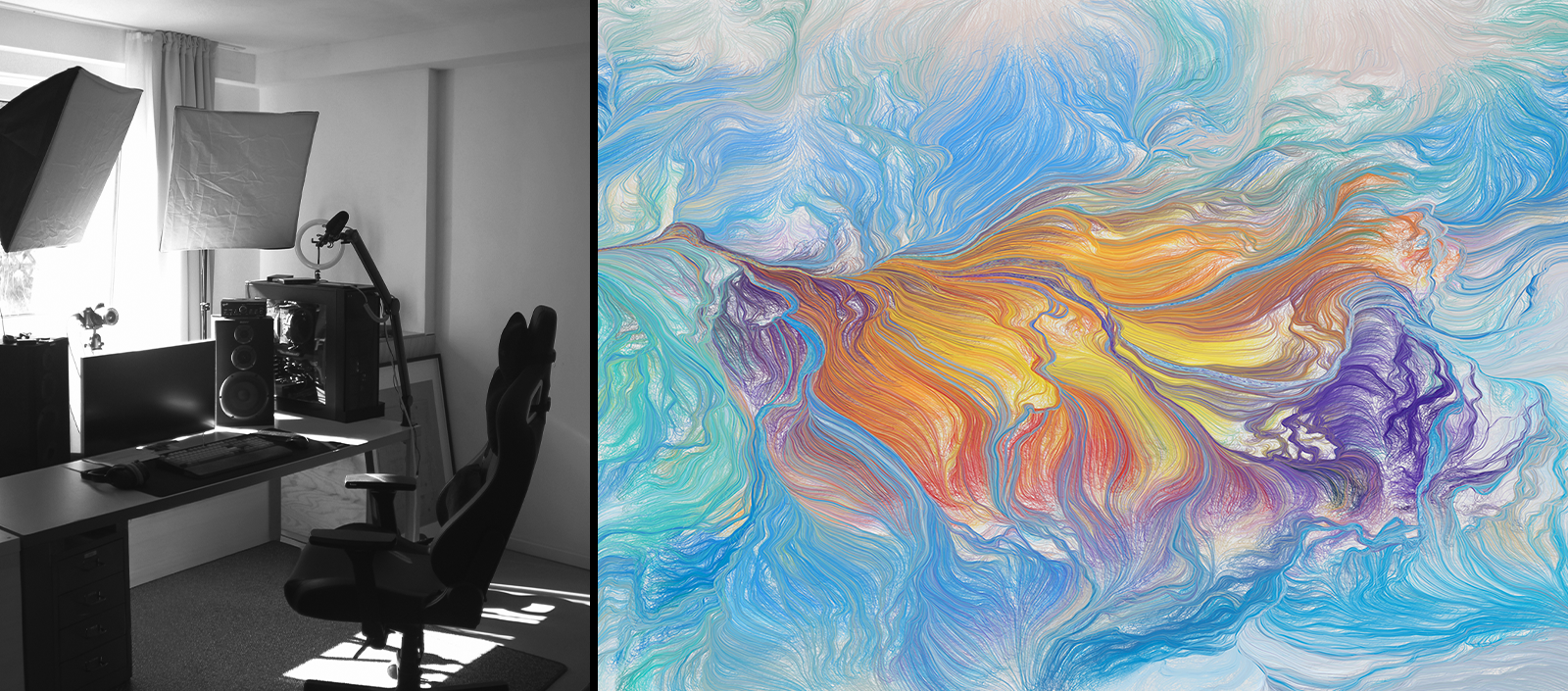
3. Where do you usually find inspiration for your work?
Mainly online—I’ve accumulated large digital folders of visual references over the years. Sometimes it’s textures, industrial design, architecture, or graphic anomalies that catch my eye. I often revisit older material and find new details. There’s something about unexpected combinations or overlooked moments that becomes the seed for a piece.
4. Are there any artists or works that you consider role models or find particularly impactful?
There are many. Daniel Widrig, who works with sculpture and digital fabrication, continues to do remarkable things at the intersection of form and technology. Marcel Schwittlick, a friend of mine here in Berlin, uses plotters and code in ways that blur performance, installation, and drawing. His approach to physical generative work is inspiring. I’m also influenced by the wider tradition of conceptual systems-based art, though my work is more visually driven.
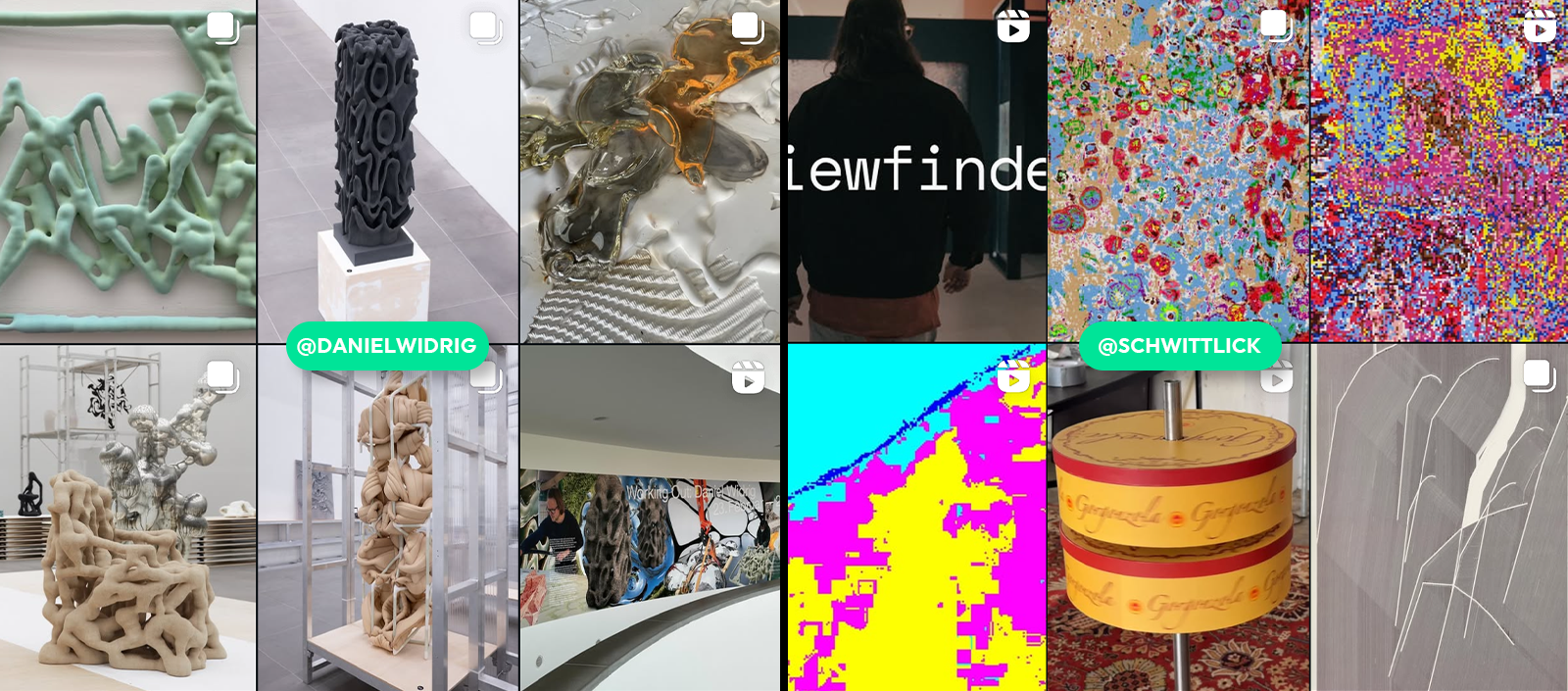
Source : (LEFT) DANIEL WIDRIG INSTAGRAM, (RIGHT) SCHWITTLICK INSTRAGRAM
5. What tools or software do you mainly use in your creative process?
I use a mix of open-source and proprietary tools. Blender, Processing, TouchDesigner, and Unreal Engine are part of my core toolkit. More recently I’ve been integrating generative AI into my workflow. Mainly Stable Diffusion variants for texture generation or rapid visual ideation. I also use language models to assist with coding tasks. It’s a fast-moving space, and staying up to date is a challenge in itself.
6. Is there a particular message or emotion you hope to convey through your work?
Rather than a single message, I try to create visual experiences that shift perception—often slow, abstract, and immersive. The aim is to invite a kind of visual contemplation, or to subtly influence the viewer’s state of mind. I’m interested in how rhythm, repetition, and motion can create a sense of presence or calm without needing to explain themselves.
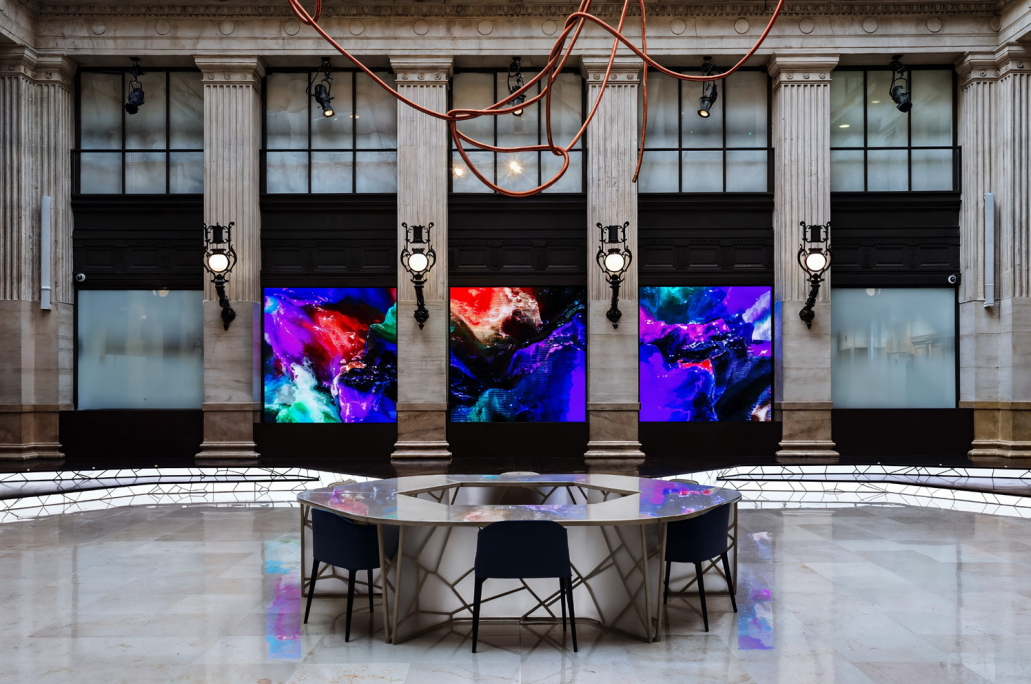 BANQUE LCL LOBBY PARIS
7. Among your own works, which one are you most attached to and why?
I try not to be overly attached to specific works. Each project teaches me something or opens up a new path. The process of making is more important to me than the outcome. That said, some installations, mostly those that involve sound, space, and motion in tandem feel more complete or resonant.
8. What has been your greatest challenge as an artist, and how did you overcome it?
I’m not mathematically trained, and much of my programming knowledge is self-taught. That can be frustrating at times, especially when trying to optimize systems or solve more complex computational problems. I’ve learned to work around those limitations by collaborating when needed, and by embracing the creative potential of imperfection. When you are an artist, you can just decide a bug is a feature.
9. Could you share any memorable experiences from exhibitions, collaborations, or awards?
Collaborating with SchnelleBunteBilder and Christopher Bauder and Samsung on The Origin of Quantum Dot was a highlight. It involved large-scale visuals and custom light choreography that pushed the boundaries of my usual practice. Exhibiting generative work in public or architectural spaces is always rewarding because it allows for different types of interaction and engagement.
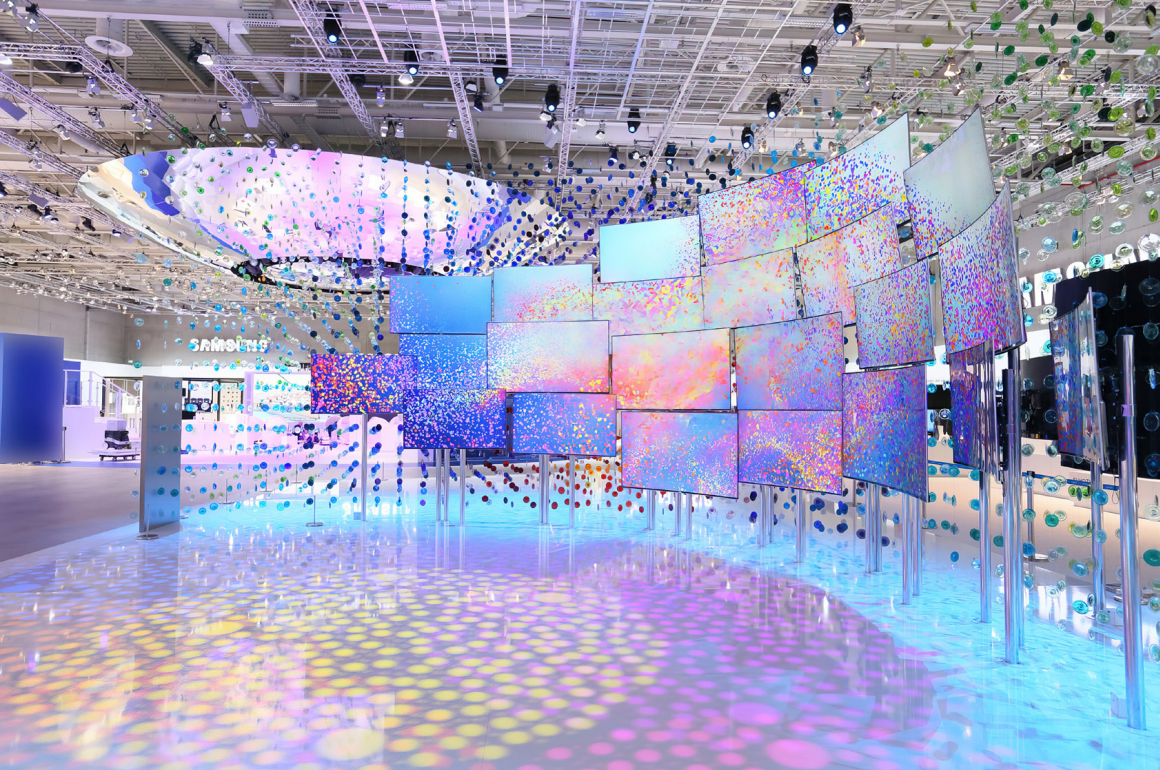
THE ORIGIN OF QUANTUM DOT PROJECT
10. Are there any trends or changes in the digital art scene that you’re currently paying attention to?
I’m particularly interested in the growing recognition of ambient and generative art as serious artistic practices—not just visual effects. There’s also a growing awareness of the aesthetics of slowness and systems that evolve over time, which I find promising. Of course, AI is changing everything—both technically and culturally. It’s a powerful too and I am ready to let it run / ruin my life in the future.
11. Is there anything you hope to see from LED.ART in the future, or any role you’d like it to play?
I’d love to see LED.ART expand its focus on real-time generative works, especially those that push boundaries in terms of format and context.
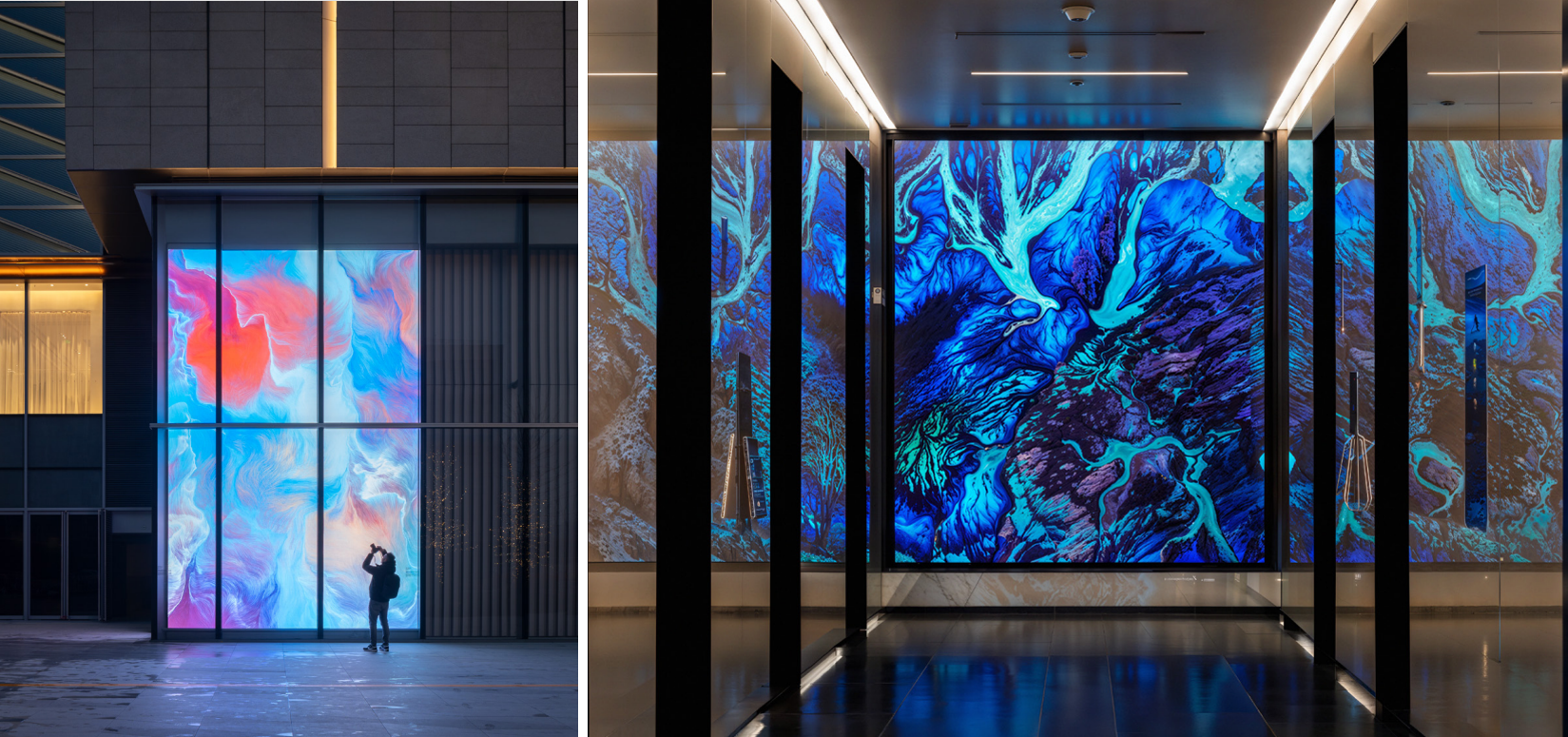
(LEFT) MIX C SHOPPING MALL, (RIGHT) 1275K WASHINGTON DC ELEVATOR HALL
12. What are your upcoming plans or artistic goals?
In the long term, I’m interested in building more complex systems that combine light, sound, and generative visuals in physical environments and ultimately achieve world domination — essentially immersive ambient experiences you can inhabit. Short term, I’m continuing to explore new tools, refine my practice, and stay curious, extending my reach and leverage with software machines and LLMs. The goal is always to continuously refine the work - add more detail, complexity, better movement and so forth. Gradual improvement is a bottomless pit.
The story of Andreas Nicolas Fischer shows how digital art has evolved beyond mere visual effects, establishing itself as a contemporary art form that expands perception and sensibility. His path of relentless experimentation and gradual refinement resonates with LED.ART’s vision of “expanded possibilities in media art.” We look forward to seeing how his future works will ripple through the world and open new spaces of reflection within our everyday lives.



Between Structure and Chance
: The Generative Art of Andreas Nicolas Fischer
by LED.ART EDITORIAL
At the intersection of light and code, structure and chance, unfolds the world of Andreas Nicolas Fischer. Instead of drawing every frame, he builds systems and elevates the unpredictable flows they generate into works of art. Based in Berlin, Fischer invites viewers on a journey through rhythm, repetition, and abstraction—an experience that briefly shifts perception into another dimension. In this interview, we hear his voice directly, exploring the roots of his practice, the philosophy behind his process, and his vision of where digital art is heading.
[ VODI 01_V7 ] by Andreas Nicolas Fischer
1. Please introduce yourself briefly.
My name is Andreas Nicolas Fischer. I’m a media artist based in Berlin, working primarily with generative systems, 3D graphics, and software-based processes.
2. What led you to become a 3D media artist?
I’ve always been interested in visual expression and how to maintain creative freedom within a structured practice. I studied graphic design as a pragmatic entry point, but over time gravitated toward more experimental forms. Working in motion design and art direction early on gave me technical grounding, but I felt limited creatively. Discovering generative art and the ability to build systems that produce outcomes rather than define every frame manually was a turning point. It allowed me to merge aesthetics with code and let unpredictability into the process.
3. Where do you usually find inspiration for your work?
Mainly online—I’ve accumulated large digital folders of visual references over the years. Sometimes it’s textures, industrial design, architecture, or graphic anomalies that catch my eye. I often revisit older material and find new details. There’s something about unexpected combinations or overlooked moments that becomes the seed for a piece.
4. Are there any artists or works that you consider role models or find particularly impactful?
There are many. Daniel Widrig, who works with sculpture and digital fabrication, continues to do remarkable things at the intersection of form and technology. Marcel Schwittlick, a friend of mine here in Berlin, uses plotters and code in ways that blur performance, installation, and drawing. His approach to physical generative work is inspiring. I’m also influenced by the wider tradition of conceptual systems-based art, though my work is more visually driven.
Source : (LEFT) DANIEL WIDRIG INSTAGRAM, (RIGHT) SCHWITTLICK INSTRAGRAM
5. What tools or software do you mainly use in your creative process?
I use a mix of open-source and proprietary tools. Blender, Processing, TouchDesigner, and Unreal Engine are part of my core toolkit. More recently I’ve been integrating generative AI into my workflow. Mainly Stable Diffusion variants for texture generation or rapid visual ideation. I also use language models to assist with coding tasks. It’s a fast-moving space, and staying up to date is a challenge in itself.
6. Is there a particular message or emotion you hope to convey through your work?
Rather than a single message, I try to create visual experiences that shift perception—often slow, abstract, and immersive. The aim is to invite a kind of visual contemplation, or to subtly influence the viewer’s state of mind. I’m interested in how rhythm, repetition, and motion can create a sense of presence or calm without needing to explain themselves.
7. Among your own works, which one are you most attached to and why?
I try not to be overly attached to specific works. Each project teaches me something or opens up a new path. The process of making is more important to me than the outcome. That said, some installations, mostly those that involve sound, space, and motion in tandem feel more complete or resonant.
8. What has been your greatest challenge as an artist, and how did you overcome it?
I’m not mathematically trained, and much of my programming knowledge is self-taught. That can be frustrating at times, especially when trying to optimize systems or solve more complex computational problems. I’ve learned to work around those limitations by collaborating when needed, and by embracing the creative potential of imperfection. When you are an artist, you can just decide a bug is a feature.
9. Could you share any memorable experiences from exhibitions, collaborations, or awards?
Collaborating with SchnelleBunteBilder and Christopher Bauder and Samsung on The Origin of Quantum Dot was a highlight. It involved large-scale visuals and custom light choreography that pushed the boundaries of my usual practice. Exhibiting generative work in public or architectural spaces is always rewarding because it allows for different types of interaction and engagement.
THE ORIGIN OF QUANTUM DOT PROJECT
10. Are there any trends or changes in the digital art scene that you’re currently paying attention to?
I’m particularly interested in the growing recognition of ambient and generative art as serious artistic practices—not just visual effects. There’s also a growing awareness of the aesthetics of slowness and systems that evolve over time, which I find promising. Of course, AI is changing everything—both technically and culturally. It’s a powerful too and I am ready to let it run / ruin my life in the future.
11. Is there anything you hope to see from LED.ART in the future, or any role you’d like it to play?
I’d love to see LED.ART expand its focus on real-time generative works, especially those that push boundaries in terms of format and context.
(LEFT) MIX C SHOPPING MALL, (RIGHT) 1275K WASHINGTON DC ELEVATOR HALL
12. What are your upcoming plans or artistic goals?
In the long term, I’m interested in building more complex systems that combine light, sound, and generative visuals in physical environments and ultimately achieve world domination — essentially immersive ambient experiences you can inhabit. Short term, I’m continuing to explore new tools, refine my practice, and stay curious, extending my reach and leverage with software machines and LLMs. The goal is always to continuously refine the work - add more detail, complexity, better movement and so forth. Gradual improvement is a bottomless pit.
The story of Andreas Nicolas Fischer shows how digital art has evolved beyond mere visual effects, establishing itself as a contemporary art form that expands perception and sensibility. His path of relentless experimentation and gradual refinement resonates with LED.ART’s vision of “expanded possibilities in media art.” We look forward to seeing how his future works will ripple through the world and open new spaces of reflection within our everyday lives.