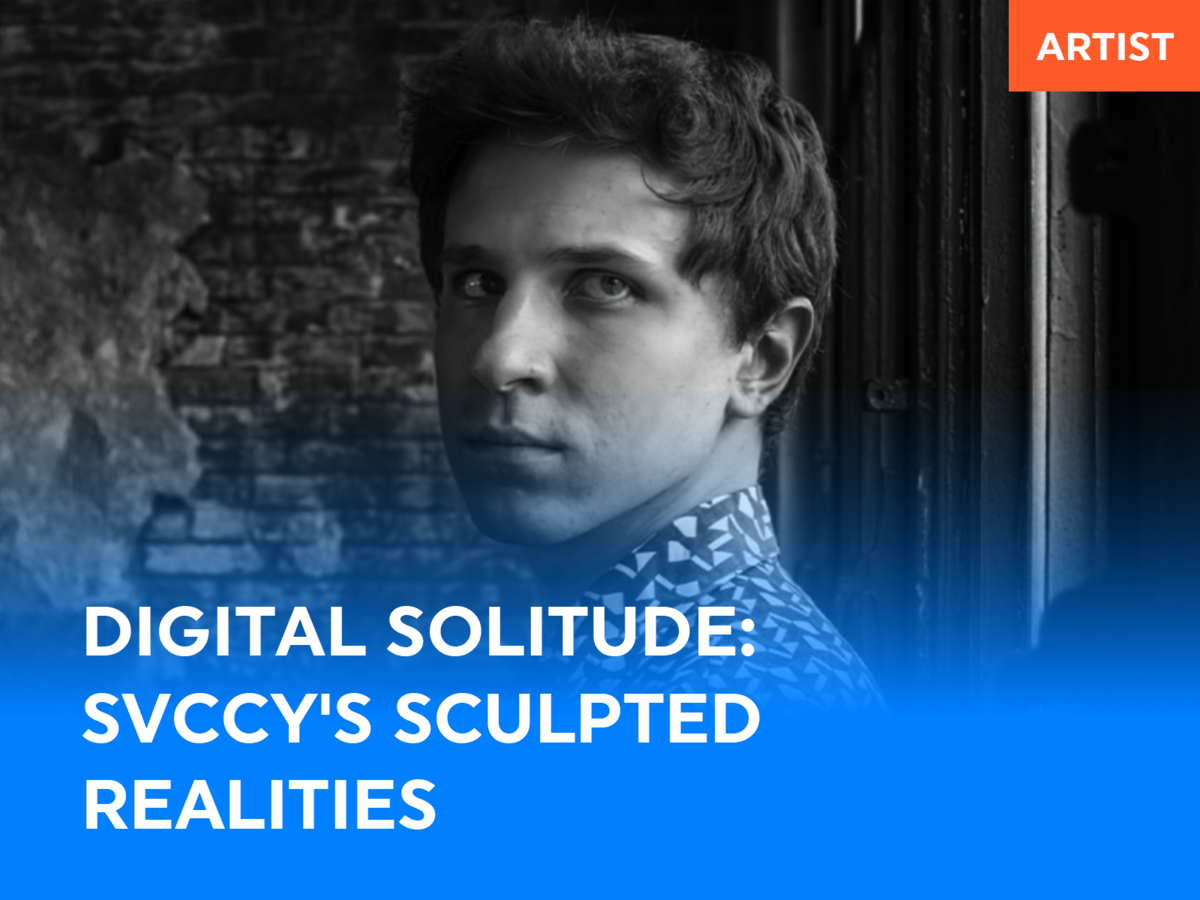
Digital Solitude: Svccy's Sculpted Realities
by LED.ART EDITORIAL
Exploring Identity and Isolation in a Digital Age — An Interview with Svccy
LED.ART is proud to present an exclusive interview with Svccy, a phygital artist whose hauntingly beautiful 3D compositions have captured the attention of audiences across Europe, Asia, and North America.
From classical sculptures set against dystopian backdrops to audiovisual performances that blend the physical and digital, Svccy’s works probe deep questions of identity, freedom, and emotional disconnect in today’s hyper-connected world.
In this conversation, we dive into the artist's journey — from early Vaporwave inspirations to staging visuals for Maestro Riccardo Muti’s opera productions — and hear about the message behind the “Statue Houses” series exhibited through LED.ART.
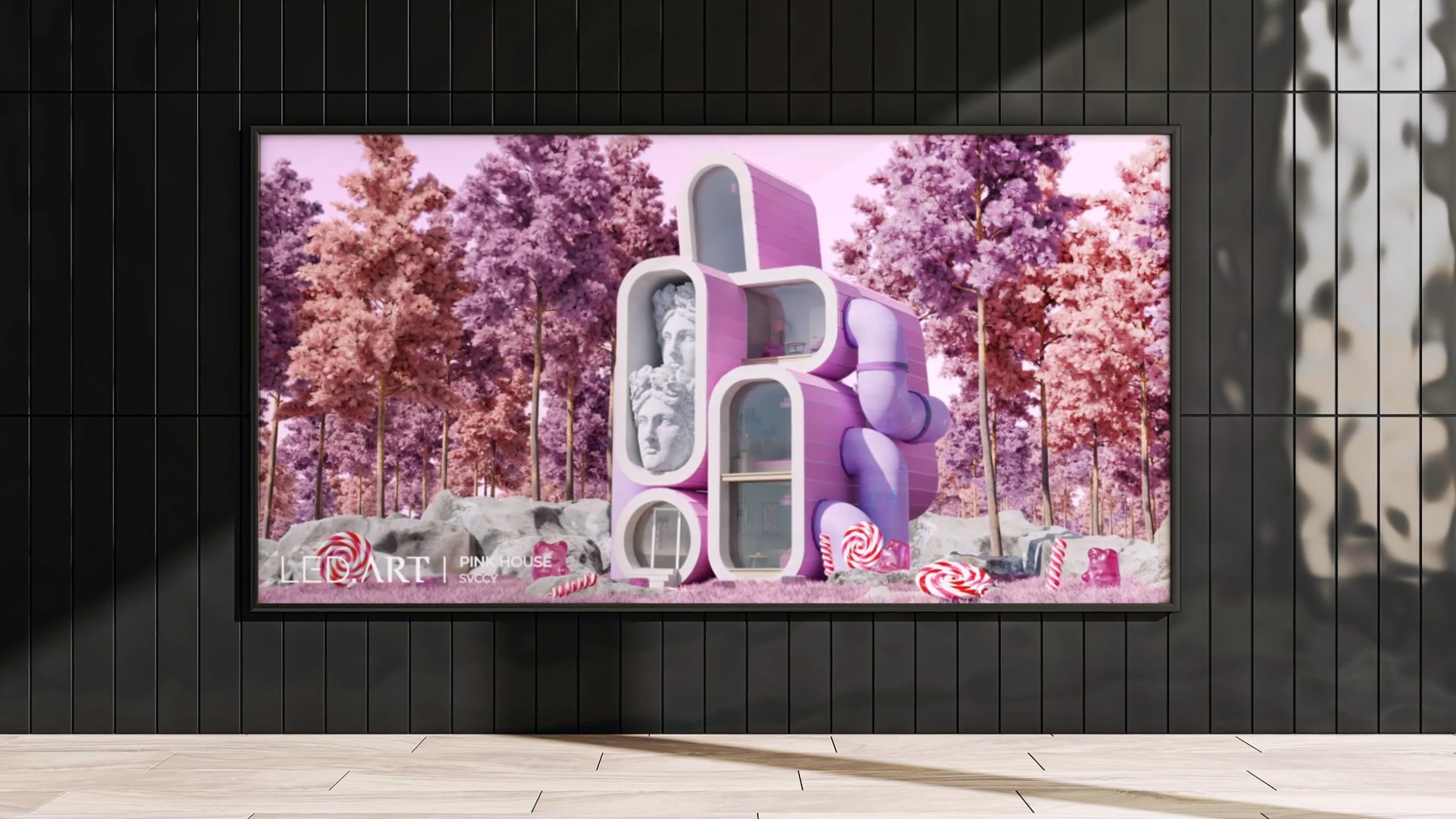
Q1. Please introduce yourself briefly.
A. I'm Svccy, a digital artist from Italy. I began my artistic journey in 2016, initially working with digital collage art before moving into 3D graphics. My work explores themes such as identity, authenticity, and the illusion of freedom in today’s media-driven and highly technological world. I’m particularly interested in representing the loss of individuality in modern society, often portraying statues or obscured identities in my pieces.
I create immersive visual compositions that are often accompanied by original music, which I also produce myself, aiming for a complete, multidimensional experience. Over the years, my work has been exhibited internationally in cities like London, Tokyo, Milan, and Paris. In 2023, I was one of the first Italian artists to be featured in a solo show at W1 Curates in London, followed by projects with Neo Shibuya TV in Tokyo and Scenograpy for the opera theatre under the direction of Maestro Riccardo Muti.
In 2024 and 2025, my digital works have continued to be shown globally, from over 1,000 public screens across Belgium to collaborations with the Venetian Resort in Las Vegas and exhibitions in Istanbul, South Africa, and Southeast Asia. I’m represented by Zanini Arte gallery in Mantua, Italy, and regularly participate in international exhibitions and art fairs as a phygital artist.
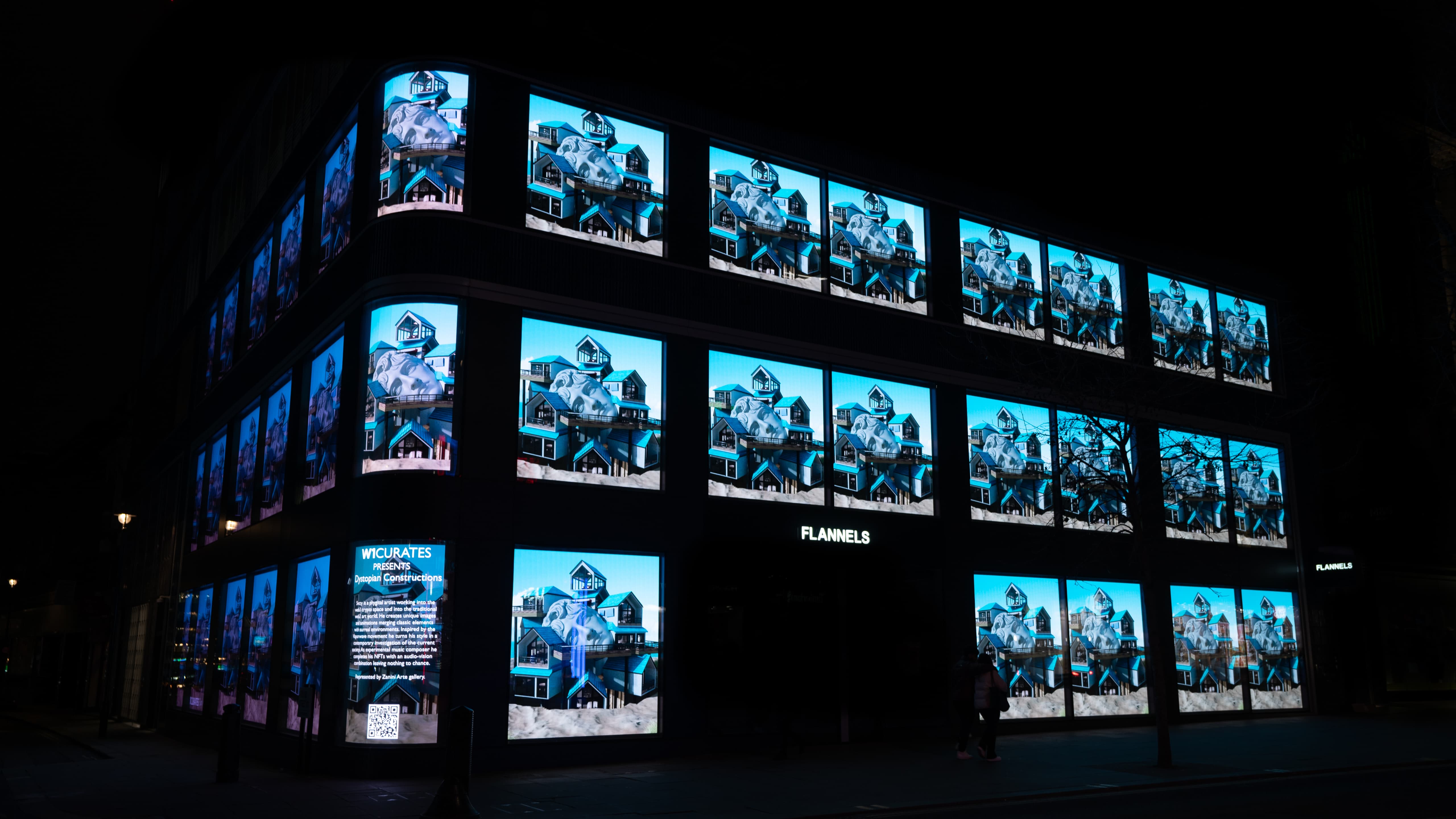
Dystopian Constructions — Solo Exhibition at W1 Curates, London (2023). Photo courtesy of Svccy
Q2. What led you to become a 3D media artist?
A. I’ve always been fascinated by art, and ever since I was young, I’ve enjoyed visiting museums and exhibitions. Getting lost in long galleries filled with artworks and observing beauty in its many forms has always been a pleasure for me.
My approach to digital art, and specifically to the first technique I developed, collage art, happened purely by chance. Around 2016, I came across the Vaporwave movement, which had emerged online around 2011–2012. Inspired by that aesthetic, I started teaching myself how to use various image manipulation programs, especially Photoshop, and began creating my first digital collages. For the first few years, my work closely followed the visual language and stylistic codes of the Vaporwave (or Aesthetic) movement.
Over time, I gradually moved away from collage art and began developing my own visual approach, which naturally led me to 3D art, a medium that allowed me to explore my ideas in a deeper and more complex way.
Q3. Where do you usually find inspiration for your work? Are there any artists or works that you consider role models or find particularly impactful? Why?
A. My work has been influenced by a variety of artistic movements and creators who’ve left a deep mark on my creative journey. One of my main references, as I’ve mentioned before, is the Vaporwave movement, not just as a music genre, but especially for its visual aesthetic. Born on the internet in the early 2010s, Vaporwave reinterprets elements of pop culture, postmodern architecture, and ‘80s–‘90s advertising through a nostalgic and critical lens. The use of neon colors, classical statues, and digital glitches has had a strong impact on my visual world.
From a more traditional art perspective, I draw a lot of inspiration from metaphysical painters like Giorgio de Chirico, whose deserted squares and enigmatic architecture create a suspended sense of time, and from surrealists like René Magritte, a master of dreamlike imagery and the ambiguity of reality. Classical sculpture also plays a key role in my work — I’m fascinated by the idea of reimagining these timeless forms in futuristic or dystopian settings, creating a dialogue between past and present.
In the field of digital art, I’ve been influenced by many contemporary artists such as Beeple, Filip Hodas, Andreas Wannerstedt, and others, who combine technical mastery with strong conceptual foundations, producing visually and narratively powerful works.
Music is also a big source of inspiration for me. In fact, there have been times when I’ve started a visual piece by first creating or listening to the music — for example, in the stage designs I developed for the operas Norma and Nabucco. The sound often guides the mood, rhythm, and emotional tone of the visuals.
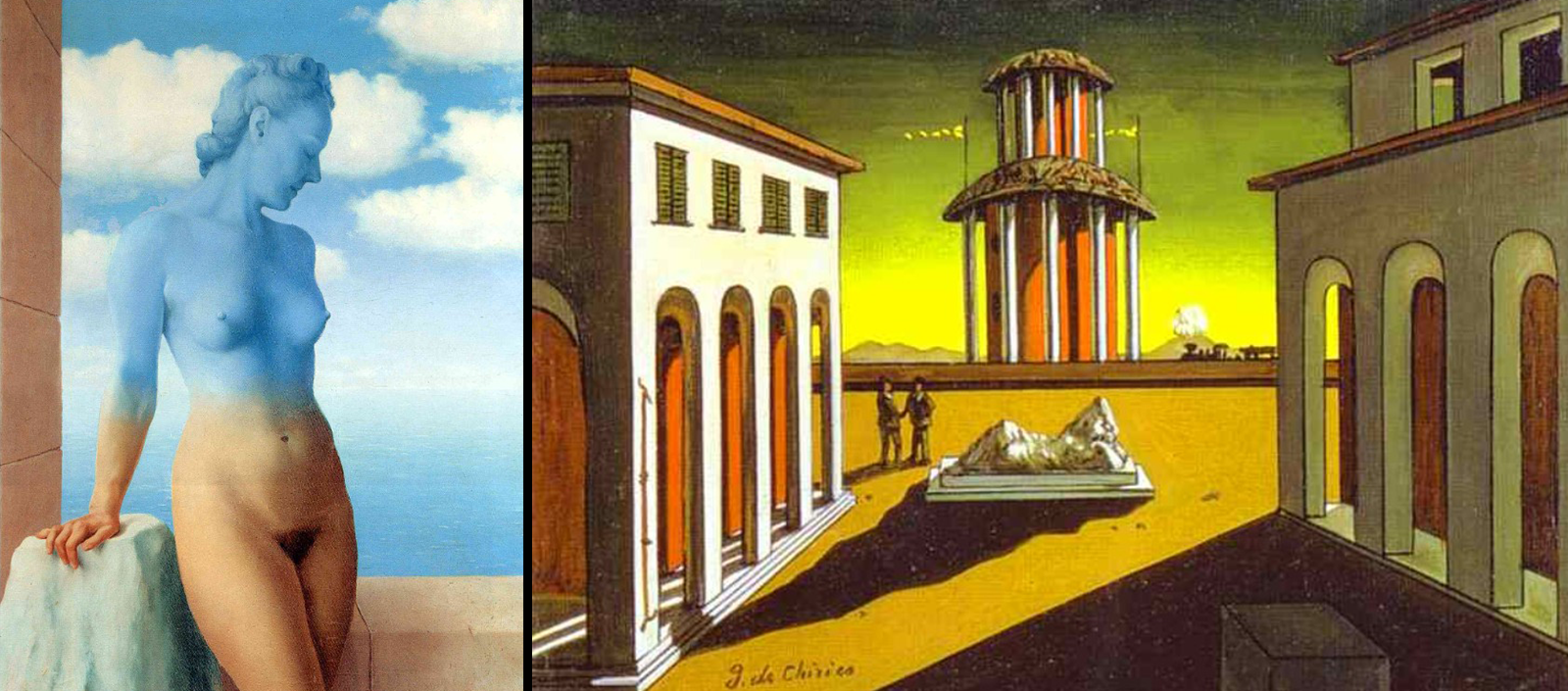
(Left) BLACK MAGIC by René Magritte (1945), (Right) Piazza d'Italia by Giorgio de Chirico (1913)
Q4. What tools or software do you mainly use in your creative process?
A. Right now, my main tool is 3D graphics, and I primarily use Blender for my work. It gives me a high level of control when it comes to modeling, lighting, and animating scenes with great detail and precision.
The process usually starts with creating a 3D model — sometimes it’s a reimagined classical statue or an architectural element. Then I focus on textures and materials, selecting surfaces like marble, metal, glass, or reflective elements to achieve the specific visual effect I’m looking for. Lighting plays a crucial role in my workflow: I often use dramatic lighting setups and strong color contrasts to create a heightened sense of space and depth.
In addition to 3D design, I use post-production tools like Photoshop and Premiere Pro to refine the visuals and add final effects. Over the past year, I’ve also been exploring the integration of artificial intelligence into my creative process, not as a replacement, but as a way to streamline certain parts of the workflow and open up new possibilities.
Q5. Is there a particular message or emotion you hope to convey through your work?
A. Through my work, I aim to explore and provoke reflection on themes like identity, authenticity, and the idea of freedom in our media-saturated, tech-driven world. I mainly use 3D graphics to create animated compositions where statues often appear in dystopian environments or are partially obscured by objects, symbols of the loss of individuality and the alienation that defines much of contemporary life.
I try to create suspended, almost timeless atmospheres, spaces that evoke a kind of digital solitude. My pieces speak to the paradox we live in today: we’re constantly connected, yet so often emotionally isolated. While there’s a certain critical or melancholic layer to the message, I always put a lot of care into the visual side of things, using bold colors, atmospheric lighting, and harmonious compositions to draw the viewer in and encourage a moment of pause and reflection.
The triptych displayed on Led.Art, part of my “Statue Houses” series, reflects on how we are increasingly building walls around our insecurities, solidifying them like concrete. At the same time, we’re endlessly distracted by material things and the lives of others, especially through social media, watching each other from a distance like silent observers behind fences of our own making.
Q6. Among your own works, which one are you most attached to and why?
A. One of the works I feel most connected to is Entwined Existences. It holds a special place for me not only because of its visual composition, but also because of the concept behind it. The piece reflects how, in today’s society, our emotional and sentimental choices are often shaped by work pressures, market dynamics, and the fear of not finding our place within the social and economic system.
It’s a theme that I believe many people can relate to, even if they don’t always speak about it openly. On top of that, this work was awarded first place in an art competition in Piacenza, Italy, and the physical piece became part of the collection of the organizing association. That recognition made the project even more meaningful to me both artistically and personally.
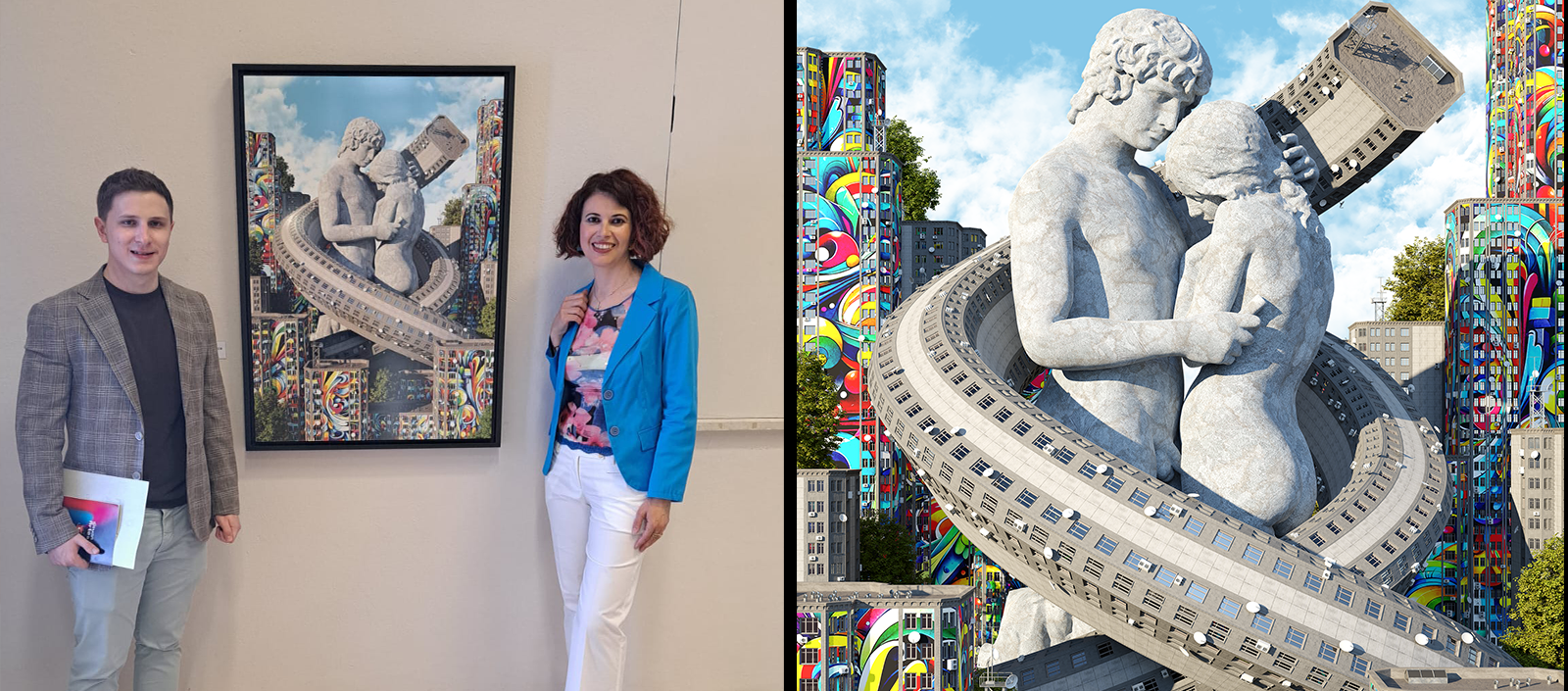
Entwined existences (2024), Photo courtesy of Svccy.
Q7. What has been your greatest challenge as an artist, and how did you overcome it?
A. One of the greatest challenges I’ve faced as an artist is staying true to my ideas and inner vision while making sure that each work still fits within the broader poetic narrative that defines my artistic identity. It’s not always easy to translate complex thoughts or emotional states into a visual language, especially when you’re constantly evolving and experimenting with new techniques or themes.
There’s always a fine balance between innovation and consistency, pushing yourself creatively without losing the core thread that connects your body of work. Over time, I’ve learned that overcoming this challenge requires patience, deep reflection, and constant study. Before starting a new piece, I spend a lot of time thinking through the concept and how it relates to my overall vision. I revisit my past works, take notes, and ask myself whether the new idea adds something meaningful to the larger conversation I’m trying to have through my art.
It's an ongoing process, but I’ve come to see it as an essential part of growth, both as a creator and as a person. Staying connected to what I want to say, while remaining open to change, is what keeps my work honest and evolving.
Q8. Could you share any memorable experiences from exhibitions, collaborations, or awards?
A. One of the most memorable experiences in my career, aside from my solo show in London with W1 Curates, was working as a set designer for the digital scenography of the classic operas Norma by Vincenzo Bellini and Nabucco by Giuseppe Verdi, both conducted by the legendary Maestro Riccardo Muti.
It was an incredibly demanding challenge, as I had to visually interpret and animate over five hours of music. Translating such emotionally rich and complex compositions into visuals that could support,without overpowering, the live performance required a deep understanding of both the narrative and musical structure of the operas.
What made the experience even more unique was how interdisciplinary it was. Unlike most digital art projects, this one required me to engage with elements that are usually outside the scope of a digital artist’s workflow, such as coordinating with a live classical orchestra, adapting to stage lighting, and syncing visuals in real-time with the music.
It was intense, but also extremely rewarding and formative. It pushed me to grow not only as a visual artist but also as a communicator and collaborator, learning how to merge different worlds, classical music, theater, and digital media, into a unified artistic experience.
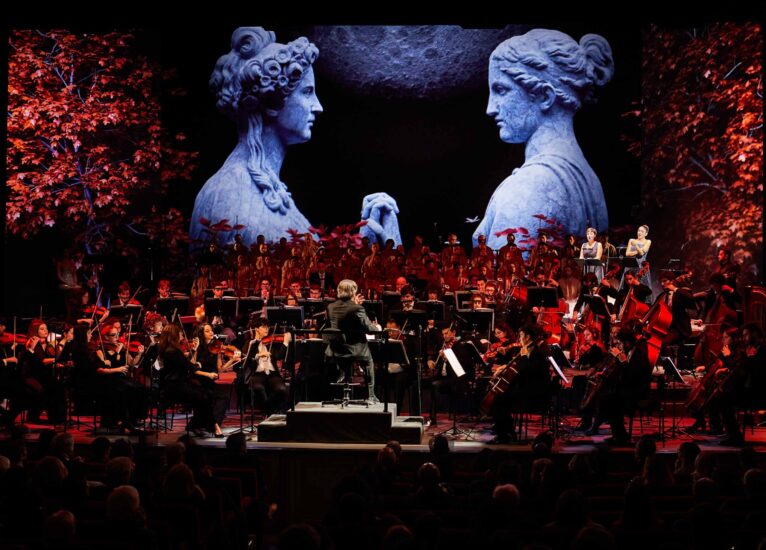 Scene from Norma by V.Bellini, Theatro Alighieri, Italy(2023), Photo courtesy of Svccy
Q9. Are there any trends or changes in the digital art scene that you’re currently paying attention to?
A. Lately, I’ve been paying close attention to the rapid development of artificial intelligence and its application in the arts, particularly within the 3D digital space. It’s fascinating to see how these new tools are opening up possibilities we couldn’t have imagined just a few years ago, from generative design to real-time asset creation and advanced motion or texture simulations.
What really interests me is how AI can be integrated into the creative workflow not just as a gimmick, but as a meaningful tool to enhance and accelerate certain parts of the process. For example, it can assist in ideation, optimize repetitive tasks like UV mapping or rigging, or even provide inspiration by generating unexpected variations of a model or scene.
That said, I think the real challenge is using these technologies without losing the human element, the poetic, emotional layer that gives art its depth. For me, AI should support the creative vision, not replace it. I’m currently experimenting with different ways to incorporate it into my 3D projects, always trying to strike a balance between innovation and authenticity.
It’s an exciting time for digital art, and I believe artists who approach these tools with curiosity and intention can really expand the boundaries of what’s possible.
Q10. Is there anything you hope to see from LED.ART in the future, or any role you’d like it to play?
A. I believe LED.ART is already doing an impressive job in offering valuable opportunities to digital artists and showcasing their work in truly remarkable spaces. What stands out to me is not only the quality of the locations where the artworks are displayed, but also the level of care and professionalism behind the communication and curation of each exhibition.
Q11. What are your upcoming plans or artistic goals?
A. Looking ahead, one of my main artistic goals is to explore more hybrid forms of expression, projects named “Requiem” that go beyond the screen and enter physical or performative space. I'm particularly interested in creating immersive installations and audiovisual performances that blend the digital with the tangible, the visual with the musical.
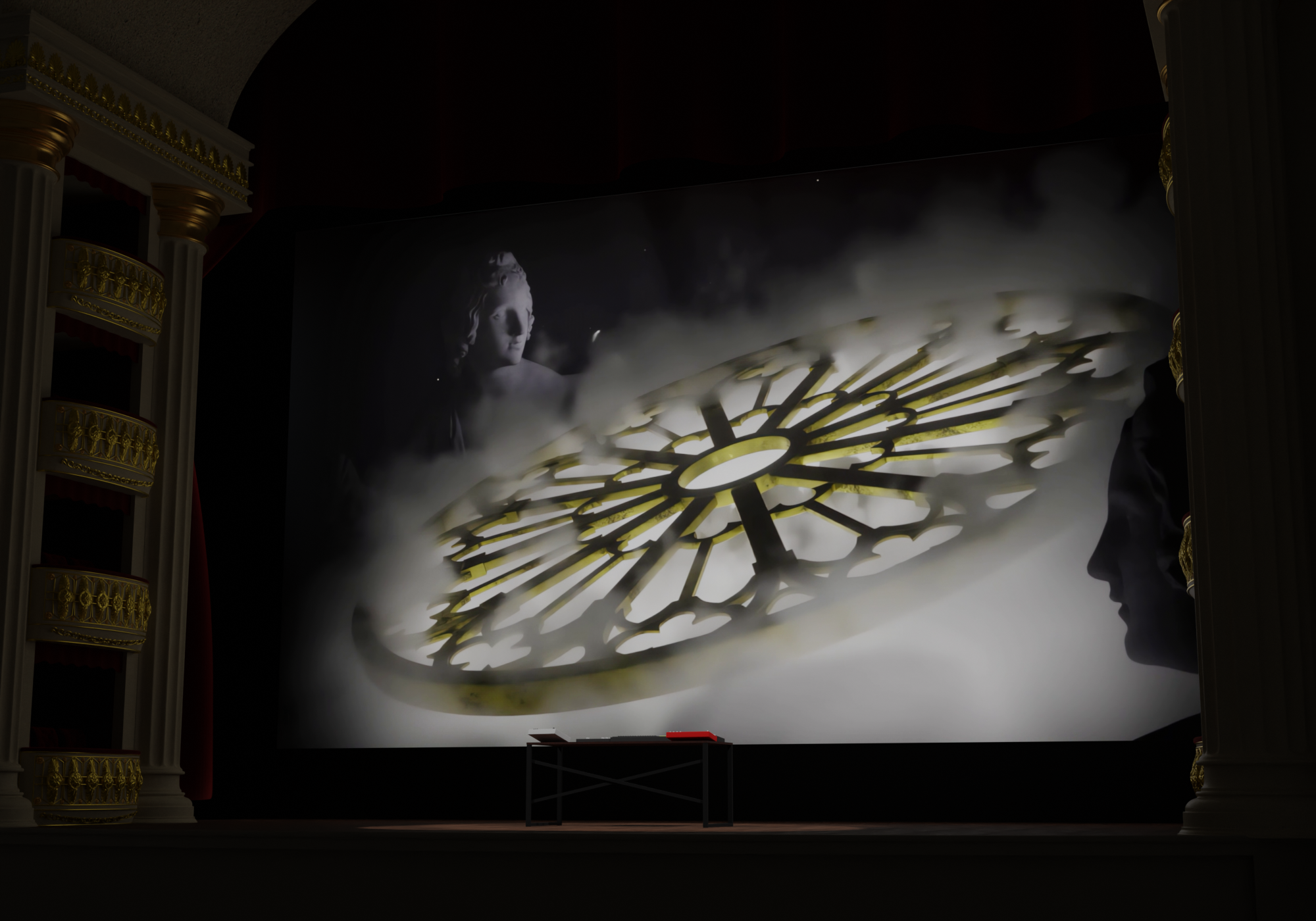
Requiem — Preview at the Theatre , Photo courtesy of Svccy
DISCOVER HIS ARTWORKS on LED.ART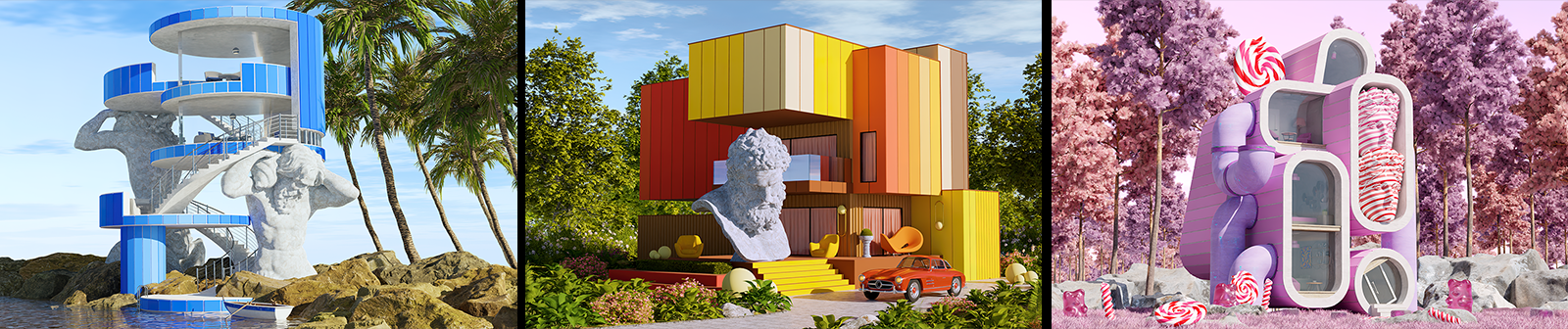
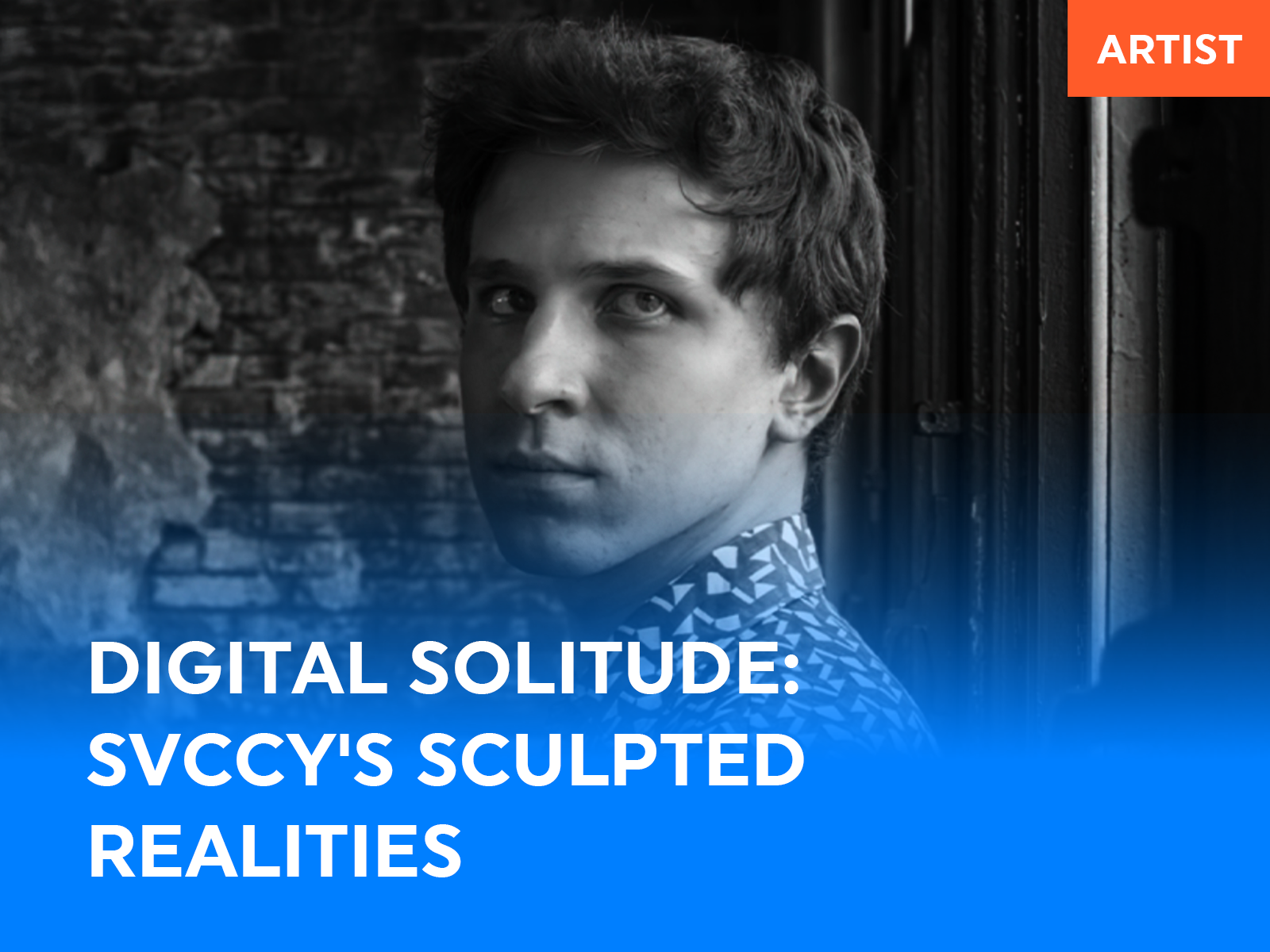



Digital Solitude: Svccy's Sculpted Realities
by LED.ART EDITORIAL
Exploring Identity and Isolation in a Digital Age — An Interview with Svccy
LED.ART is proud to present an exclusive interview with Svccy, a phygital artist whose hauntingly beautiful 3D compositions have captured the attention of audiences across Europe, Asia, and North America.
From classical sculptures set against dystopian backdrops to audiovisual performances that blend the physical and digital, Svccy’s works probe deep questions of identity, freedom, and emotional disconnect in today’s hyper-connected world.
In this conversation, we dive into the artist's journey — from early Vaporwave inspirations to staging visuals for Maestro Riccardo Muti’s opera productions — and hear about the message behind the “Statue Houses” series exhibited through LED.ART.
Q1. Please introduce yourself briefly.
A. I'm Svccy, a digital artist from Italy. I began my artistic journey in 2016, initially working with digital collage art before moving into 3D graphics. My work explores themes such as identity, authenticity, and the illusion of freedom in today’s media-driven and highly technological world. I’m particularly interested in representing the loss of individuality in modern society, often portraying statues or obscured identities in my pieces.
I create immersive visual compositions that are often accompanied by original music, which I also produce myself, aiming for a complete, multidimensional experience. Over the years, my work has been exhibited internationally in cities like London, Tokyo, Milan, and Paris. In 2023, I was one of the first Italian artists to be featured in a solo show at W1 Curates in London, followed by projects with Neo Shibuya TV in Tokyo and Scenograpy for the opera theatre under the direction of Maestro Riccardo Muti.
In 2024 and 2025, my digital works have continued to be shown globally, from over 1,000 public screens across Belgium to collaborations with the Venetian Resort in Las Vegas and exhibitions in Istanbul, South Africa, and Southeast Asia. I’m represented by Zanini Arte gallery in Mantua, Italy, and regularly participate in international exhibitions and art fairs as a phygital artist.
Dystopian Constructions — Solo Exhibition at W1 Curates, London (2023). Photo courtesy of Svccy
Q2. What led you to become a 3D media artist?
A. I’ve always been fascinated by art, and ever since I was young, I’ve enjoyed visiting museums and exhibitions. Getting lost in long galleries filled with artworks and observing beauty in its many forms has always been a pleasure for me.
My approach to digital art, and specifically to the first technique I developed, collage art, happened purely by chance. Around 2016, I came across the Vaporwave movement, which had emerged online around 2011–2012. Inspired by that aesthetic, I started teaching myself how to use various image manipulation programs, especially Photoshop, and began creating my first digital collages. For the first few years, my work closely followed the visual language and stylistic codes of the Vaporwave (or Aesthetic) movement.
Over time, I gradually moved away from collage art and began developing my own visual approach, which naturally led me to 3D art, a medium that allowed me to explore my ideas in a deeper and more complex way.
Q3. Where do you usually find inspiration for your work? Are there any artists or works that you consider role models or find particularly impactful? Why?
A. My work has been influenced by a variety of artistic movements and creators who’ve left a deep mark on my creative journey. One of my main references, as I’ve mentioned before, is the Vaporwave movement, not just as a music genre, but especially for its visual aesthetic. Born on the internet in the early 2010s, Vaporwave reinterprets elements of pop culture, postmodern architecture, and ‘80s–‘90s advertising through a nostalgic and critical lens. The use of neon colors, classical statues, and digital glitches has had a strong impact on my visual world.
From a more traditional art perspective, I draw a lot of inspiration from metaphysical painters like Giorgio de Chirico, whose deserted squares and enigmatic architecture create a suspended sense of time, and from surrealists like René Magritte, a master of dreamlike imagery and the ambiguity of reality. Classical sculpture also plays a key role in my work — I’m fascinated by the idea of reimagining these timeless forms in futuristic or dystopian settings, creating a dialogue between past and present.
In the field of digital art, I’ve been influenced by many contemporary artists such as Beeple, Filip Hodas, Andreas Wannerstedt, and others, who combine technical mastery with strong conceptual foundations, producing visually and narratively powerful works.
Music is also a big source of inspiration for me. In fact, there have been times when I’ve started a visual piece by first creating or listening to the music — for example, in the stage designs I developed for the operas Norma and Nabucco. The sound often guides the mood, rhythm, and emotional tone of the visuals.
(Left) BLACK MAGIC by René Magritte (1945), (Right) Piazza d'Italia by Giorgio de Chirico (1913)
Q4. What tools or software do you mainly use in your creative process?
A. Right now, my main tool is 3D graphics, and I primarily use Blender for my work. It gives me a high level of control when it comes to modeling, lighting, and animating scenes with great detail and precision.
The process usually starts with creating a 3D model — sometimes it’s a reimagined classical statue or an architectural element. Then I focus on textures and materials, selecting surfaces like marble, metal, glass, or reflective elements to achieve the specific visual effect I’m looking for. Lighting plays a crucial role in my workflow: I often use dramatic lighting setups and strong color contrasts to create a heightened sense of space and depth.
In addition to 3D design, I use post-production tools like Photoshop and Premiere Pro to refine the visuals and add final effects. Over the past year, I’ve also been exploring the integration of artificial intelligence into my creative process, not as a replacement, but as a way to streamline certain parts of the workflow and open up new possibilities.
Q5. Is there a particular message or emotion you hope to convey through your work?
A. Through my work, I aim to explore and provoke reflection on themes like identity, authenticity, and the idea of freedom in our media-saturated, tech-driven world. I mainly use 3D graphics to create animated compositions where statues often appear in dystopian environments or are partially obscured by objects, symbols of the loss of individuality and the alienation that defines much of contemporary life.
I try to create suspended, almost timeless atmospheres, spaces that evoke a kind of digital solitude. My pieces speak to the paradox we live in today: we’re constantly connected, yet so often emotionally isolated. While there’s a certain critical or melancholic layer to the message, I always put a lot of care into the visual side of things, using bold colors, atmospheric lighting, and harmonious compositions to draw the viewer in and encourage a moment of pause and reflection.
The triptych displayed on Led.Art, part of my “Statue Houses” series, reflects on how we are increasingly building walls around our insecurities, solidifying them like concrete. At the same time, we’re endlessly distracted by material things and the lives of others, especially through social media, watching each other from a distance like silent observers behind fences of our own making.
Q6. Among your own works, which one are you most attached to and why?
A. One of the works I feel most connected to is Entwined Existences. It holds a special place for me not only because of its visual composition, but also because of the concept behind it. The piece reflects how, in today’s society, our emotional and sentimental choices are often shaped by work pressures, market dynamics, and the fear of not finding our place within the social and economic system.
It’s a theme that I believe many people can relate to, even if they don’t always speak about it openly. On top of that, this work was awarded first place in an art competition in Piacenza, Italy, and the physical piece became part of the collection of the organizing association. That recognition made the project even more meaningful to me both artistically and personally.
Entwined existences (2024), Photo courtesy of Svccy.
Q7. What has been your greatest challenge as an artist, and how did you overcome it?
A. One of the greatest challenges I’ve faced as an artist is staying true to my ideas and inner vision while making sure that each work still fits within the broader poetic narrative that defines my artistic identity. It’s not always easy to translate complex thoughts or emotional states into a visual language, especially when you’re constantly evolving and experimenting with new techniques or themes.
There’s always a fine balance between innovation and consistency, pushing yourself creatively without losing the core thread that connects your body of work. Over time, I’ve learned that overcoming this challenge requires patience, deep reflection, and constant study. Before starting a new piece, I spend a lot of time thinking through the concept and how it relates to my overall vision. I revisit my past works, take notes, and ask myself whether the new idea adds something meaningful to the larger conversation I’m trying to have through my art.
It's an ongoing process, but I’ve come to see it as an essential part of growth, both as a creator and as a person. Staying connected to what I want to say, while remaining open to change, is what keeps my work honest and evolving.
Q8. Could you share any memorable experiences from exhibitions, collaborations, or awards?
A. One of the most memorable experiences in my career, aside from my solo show in London with W1 Curates, was working as a set designer for the digital scenography of the classic operas Norma by Vincenzo Bellini and Nabucco by Giuseppe Verdi, both conducted by the legendary Maestro Riccardo Muti.
It was an incredibly demanding challenge, as I had to visually interpret and animate over five hours of music. Translating such emotionally rich and complex compositions into visuals that could support,without overpowering, the live performance required a deep understanding of both the narrative and musical structure of the operas.
What made the experience even more unique was how interdisciplinary it was. Unlike most digital art projects, this one required me to engage with elements that are usually outside the scope of a digital artist’s workflow, such as coordinating with a live classical orchestra, adapting to stage lighting, and syncing visuals in real-time with the music.
It was intense, but also extremely rewarding and formative. It pushed me to grow not only as a visual artist but also as a communicator and collaborator, learning how to merge different worlds, classical music, theater, and digital media, into a unified artistic experience.
Q9. Are there any trends or changes in the digital art scene that you’re currently paying attention to?
A. Lately, I’ve been paying close attention to the rapid development of artificial intelligence and its application in the arts, particularly within the 3D digital space. It’s fascinating to see how these new tools are opening up possibilities we couldn’t have imagined just a few years ago, from generative design to real-time asset creation and advanced motion or texture simulations.
What really interests me is how AI can be integrated into the creative workflow not just as a gimmick, but as a meaningful tool to enhance and accelerate certain parts of the process. For example, it can assist in ideation, optimize repetitive tasks like UV mapping or rigging, or even provide inspiration by generating unexpected variations of a model or scene.
That said, I think the real challenge is using these technologies without losing the human element, the poetic, emotional layer that gives art its depth. For me, AI should support the creative vision, not replace it. I’m currently experimenting with different ways to incorporate it into my 3D projects, always trying to strike a balance between innovation and authenticity.
It’s an exciting time for digital art, and I believe artists who approach these tools with curiosity and intention can really expand the boundaries of what’s possible.
Q10. Is there anything you hope to see from LED.ART in the future, or any role you’d like it to play?
A. I believe LED.ART is already doing an impressive job in offering valuable opportunities to digital artists and showcasing their work in truly remarkable spaces. What stands out to me is not only the quality of the locations where the artworks are displayed, but also the level of care and professionalism behind the communication and curation of each exhibition.
Q11. What are your upcoming plans or artistic goals?
A. Looking ahead, one of my main artistic goals is to explore more hybrid forms of expression, projects named “Requiem” that go beyond the screen and enter physical or performative space. I'm particularly interested in creating immersive installations and audiovisual performances that blend the digital with the tangible, the visual with the musical.
Requiem — Preview at the Theatre , Photo courtesy of Svccy
DISCOVER HIS ARTWORKS on LED.ART