How Is Digital Art Created? – Understanding the Creative Process (part 2)
by LED.ART EDITORIAL
Digital art is not merely a visual output—it is a layered collection of carefully considered decisions and experiments. From an initial emotional impulse to a fully structured visual composition, the creation of digital art is an organic and multi-step process that unfolds like a narrative.
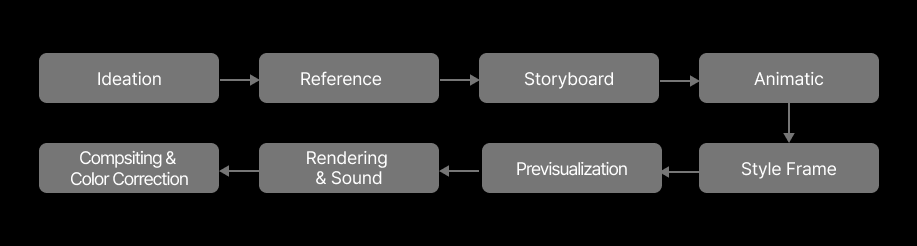
The process typically begins with ideation—the stage where an artist develops a conceptual direction. They start by identifying the feeling or atmosphere they wish to convey, gathering references from films, natural phenomena, architectural structures, or abstract ideas. Next, they create a storyboard, which outlines the narrative and flow of the piece, and then develop a style frame—a high-resolution image that defines the final look and feel of the artwork. In the previsualization stage, artists test out the composition and camera angles using grayscale renders in a 3D viewport without lighting. Once the visual rhythm and scene structure are confirmed, they apply lighting from the style frame and move on to rendering and sound design, refining the mood and pacing of the piece. Finally, the work is completed through compositing and color grading, where all visual elements are combined, and the tone and contrast are polished for final delivery.
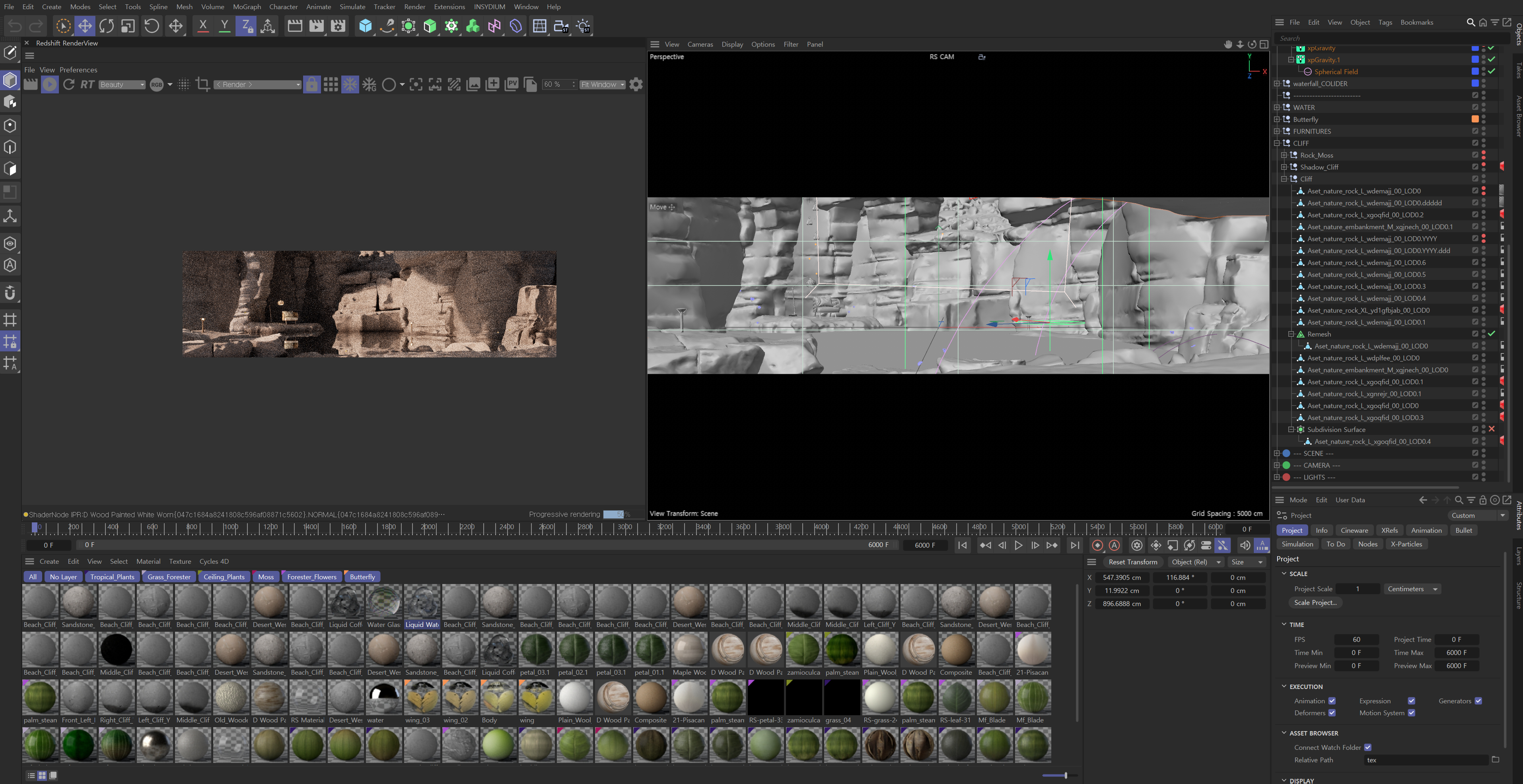
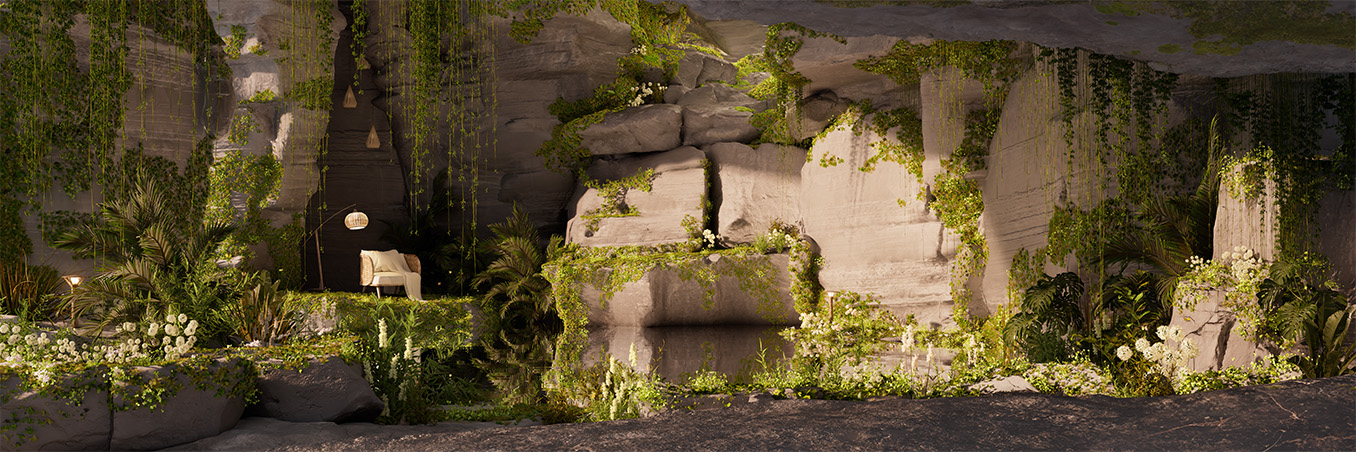
[GREENERY WATERFALL] PROCESS
These steps are not strictly linear; they evolve through constant feedback and iteration. Some artists begin with style frames and build their storyboard afterward, while others develop animatics and sound simultaneously. The key is flexibility—aligning structure, emotion, and technique in a cohesive and intuitive process.
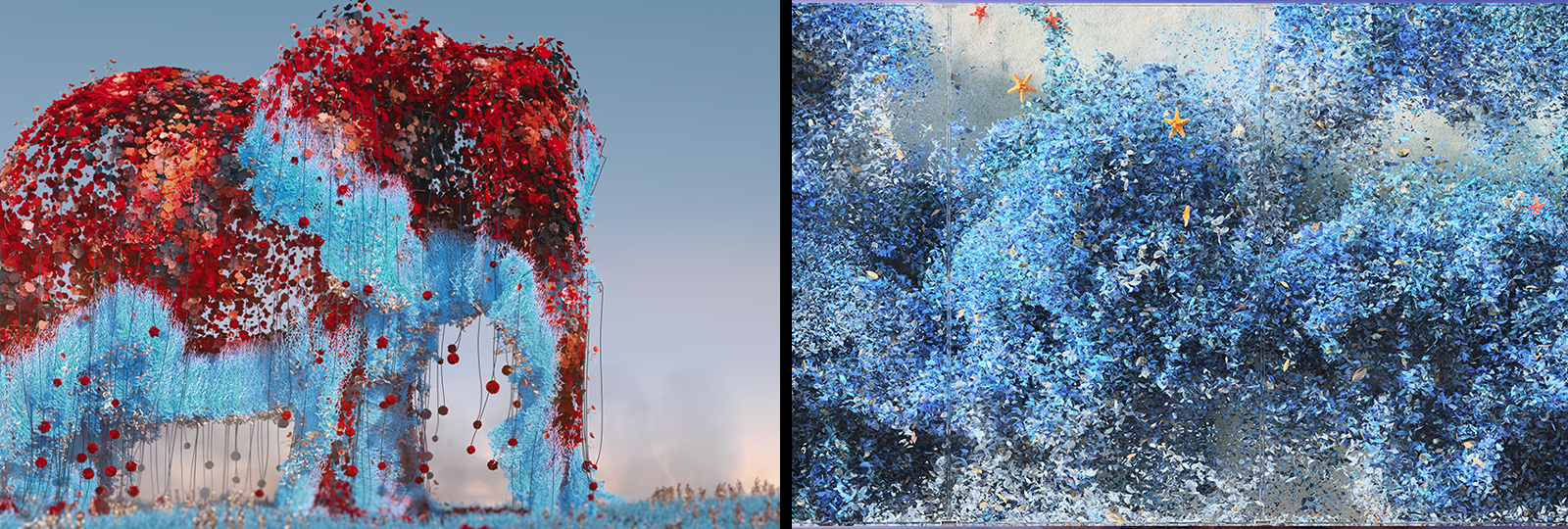
ARTWORKS : [FLOWER ELEPHANT] by DARIA ANISE, [FLOATING SUMMER] by YUHWAN JANG
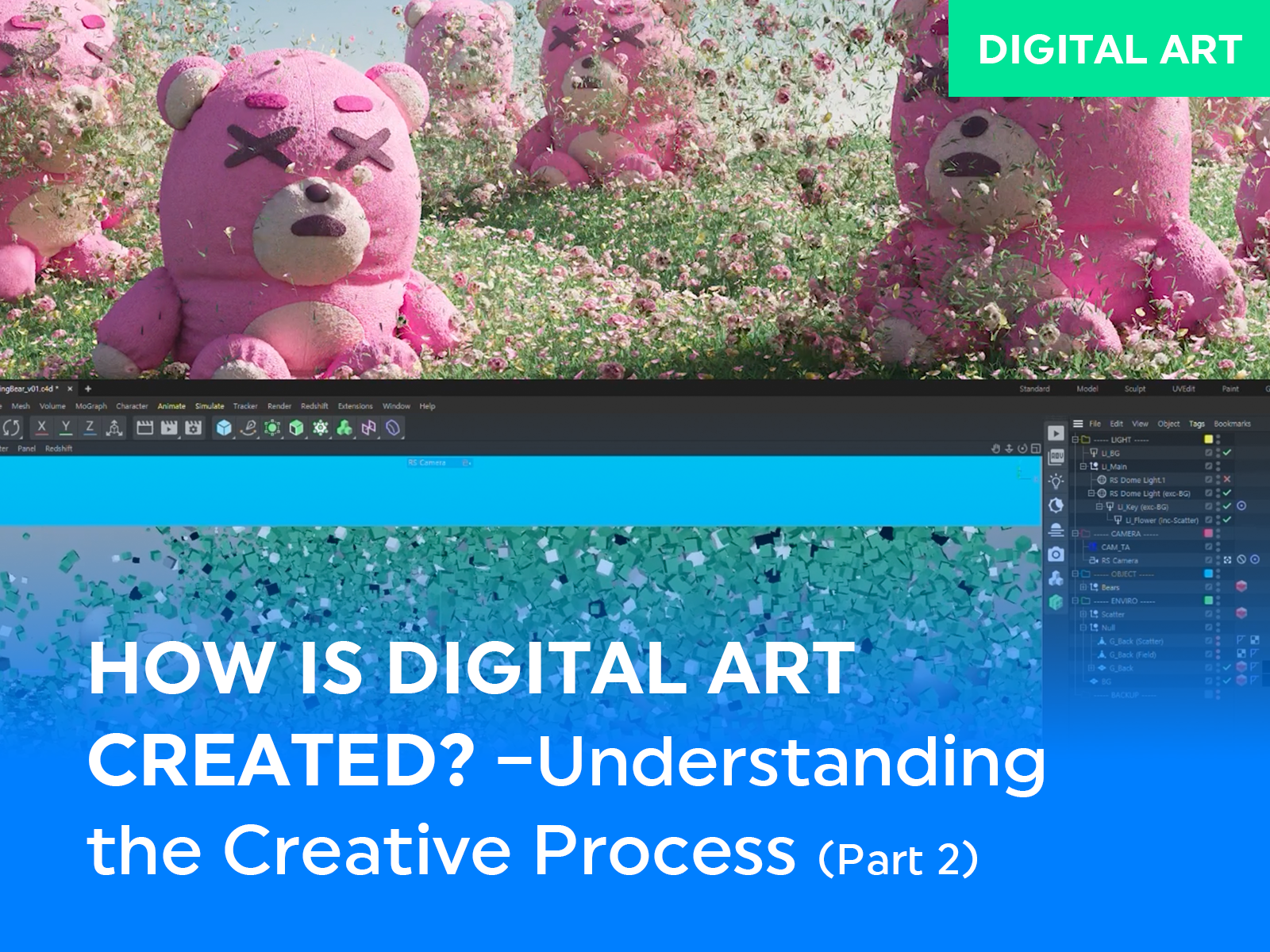
Moreover, few digital artworks rely on a single tool. Most are created through a combination of tools and techniques. For instance, LED.ART ORIGINAL’s GREENERY WATERFALL was produced in Cinema 4D (C4D) using the X-Particles plugin to generate organic particle movement—demonstrating how multiple functions and add-ons can be integrated within a single platform. Claude combines TouchDesigner for real-time interaction and Notch for visual refinement. Victoria Fard blends algorithmic form generation with digital modeling tools to create architectural and narrative-driven environments. Recently, artists have also begun incorporating AI tools into their process—to generate storyboards, style frames, or even final visual assets. These tools are used selectively at different stages, depending on the concept and emotional intent of the piece.
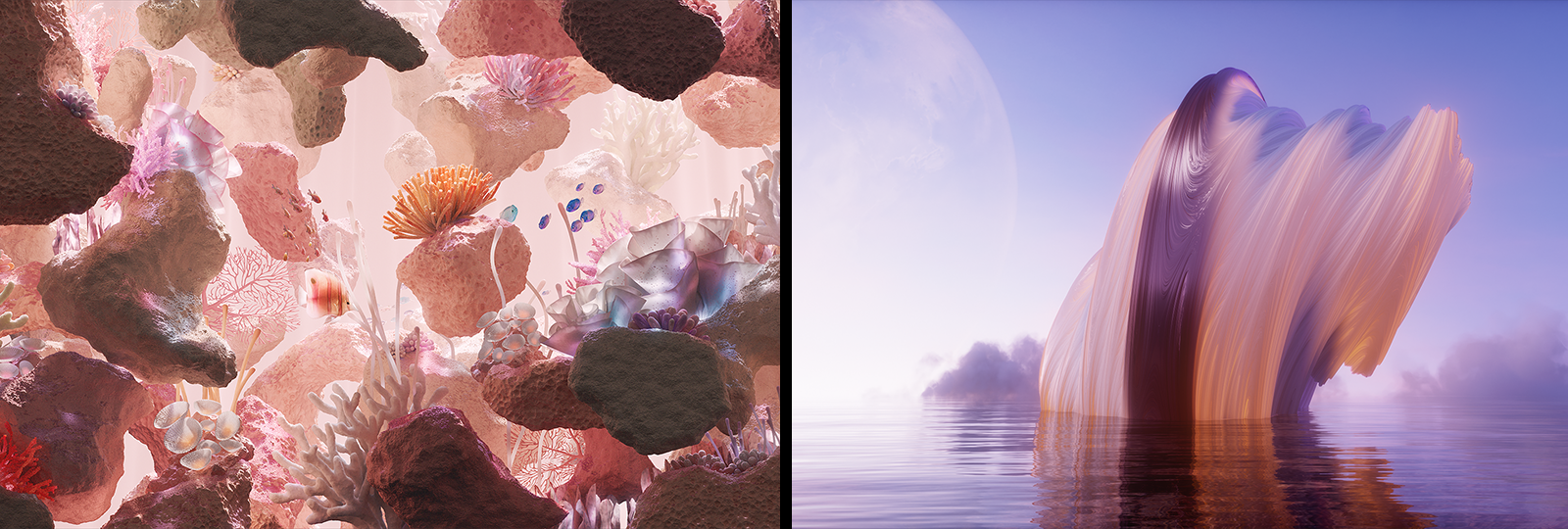
ARTWORKS : [FLORIUM : BLOOM] by KOES, [QUATERNION_JULIA_A] by TESSERACT
In the end, digital art is a stage where an artist’s intention becomes form. The production process reveals how emotions are translated into visual structure, and how rhythm, density, and flow are embedded within space. Understanding this journey helps us appreciate media art not just for its output, but for its rich inner process—and invites us to view creative potential with a broader perspective.



How Is Digital Art Created? – Understanding the Creative Process (part 2)
by LED.ART EDITORIAL
Digital art is not merely a visual output—it is a layered collection of carefully considered decisions and experiments. From an initial emotional impulse to a fully structured visual composition, the creation of digital art is an organic and multi-step process that unfolds like a narrative.
The process typically begins with ideation—the stage where an artist develops a conceptual direction. They start by identifying the feeling or atmosphere they wish to convey, gathering references from films, natural phenomena, architectural structures, or abstract ideas. Next, they create a storyboard, which outlines the narrative and flow of the piece, and then develop a style frame—a high-resolution image that defines the final look and feel of the artwork. In the previsualization stage, artists test out the composition and camera angles using grayscale renders in a 3D viewport without lighting. Once the visual rhythm and scene structure are confirmed, they apply lighting from the style frame and move on to rendering and sound design, refining the mood and pacing of the piece. Finally, the work is completed through compositing and color grading, where all visual elements are combined, and the tone and contrast are polished for final delivery.
[GREENERY WATERFALL] PROCESS
These steps are not strictly linear; they evolve through constant feedback and iteration. Some artists begin with style frames and build their storyboard afterward, while others develop animatics and sound simultaneously. The key is flexibility—aligning structure, emotion, and technique in a cohesive and intuitive process.
ARTWORKS : [FLOWER ELEPHANT] by DARIA ANISE, [FLOATING SUMMER] by YUHWAN JANG
Moreover, few digital artworks rely on a single tool. Most are created through a combination of tools and techniques. For instance, LED.ART ORIGINAL’s GREENERY WATERFALL was produced in Cinema 4D (C4D) using the X-Particles plugin to generate organic particle movement—demonstrating how multiple functions and add-ons can be integrated within a single platform. Claude combines TouchDesigner for real-time interaction and Notch for visual refinement. Victoria Fard blends algorithmic form generation with digital modeling tools to create architectural and narrative-driven environments. Recently, artists have also begun incorporating AI tools into their process—to generate storyboards, style frames, or even final visual assets. These tools are used selectively at different stages, depending on the concept and emotional intent of the piece.
ARTWORKS : [FLORIUM : BLOOM] by KOES, [QUATERNION_JULIA_A] by TESSERACT
In the end, digital art is a stage where an artist’s intention becomes form. The production process reveals how emotions are translated into visual structure, and how rhythm, density, and flow are embedded within space. Understanding this journey helps us appreciate media art not just for its output, but for its rich inner process—and invites us to view creative potential with a broader perspective.