Media Art Therapy: When Art Becomes a Space of Healing
by LED.ART EDITORIAL
Moments of Meditation Shaped by Light, Sound, and Digital Art
Art has always carried the power to heal. From the earliest days of humanity, drawing, painting, and listening to music have been more than acts of appreciation — they have served as ways to release emotions and restore inner balance. Countless studies and experiences have proven art’s ability to support emotional regulation and mental well-being. Today, with the rise of new technologies, media art is inheriting and reinterpreting this healing function for a new era.
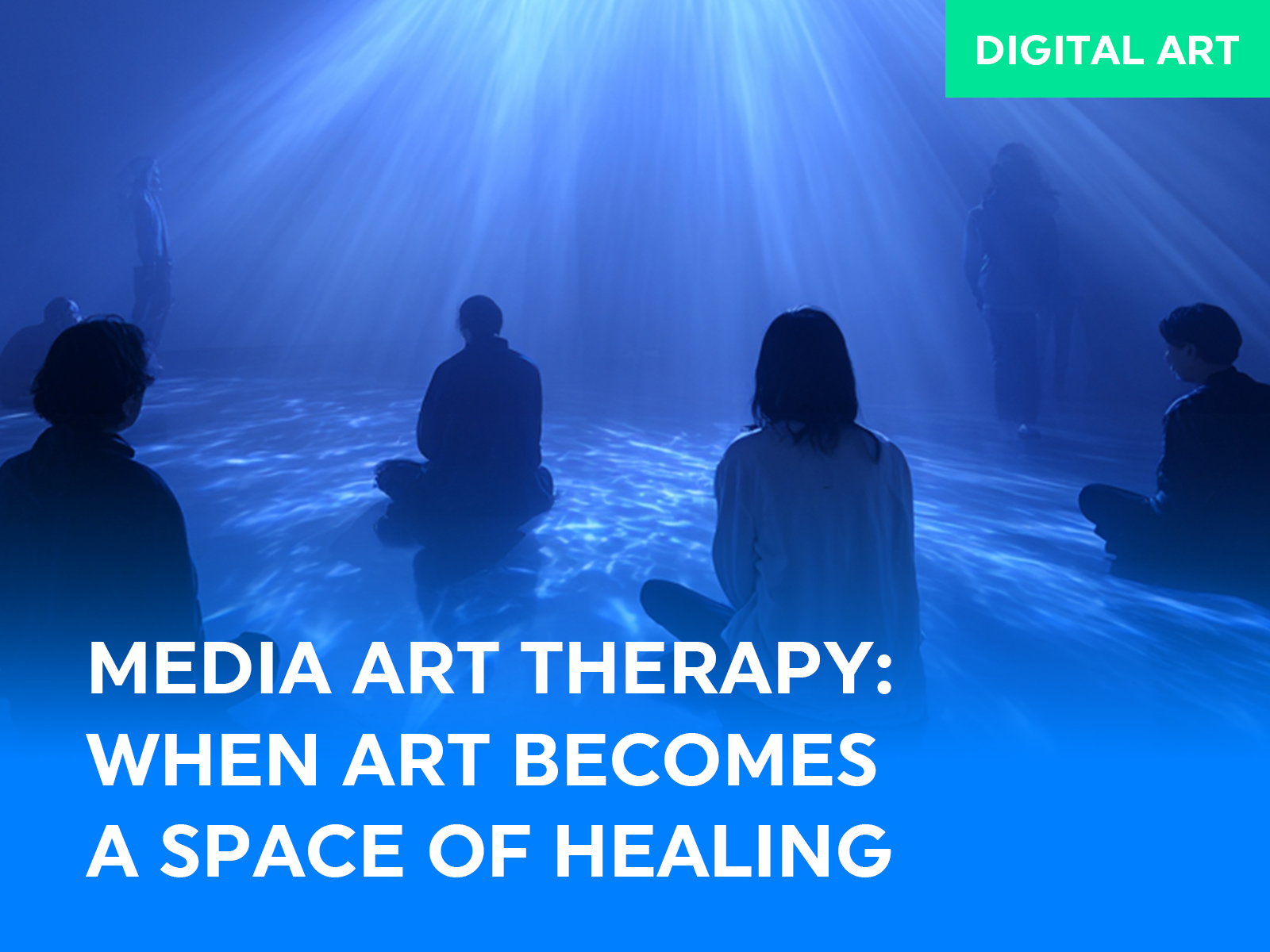
When light, sound, and digital imagery converge, media art can do more than offer visual stimulation — it can directly influence the viewer’s senses and psyche. Inside immersive exhibition spaces, visitors feel rhythms reminiscent of nature, perceive the passage of time, and release suppressed emotions. This process transcends mere observation, reaching into the realm of therapy.
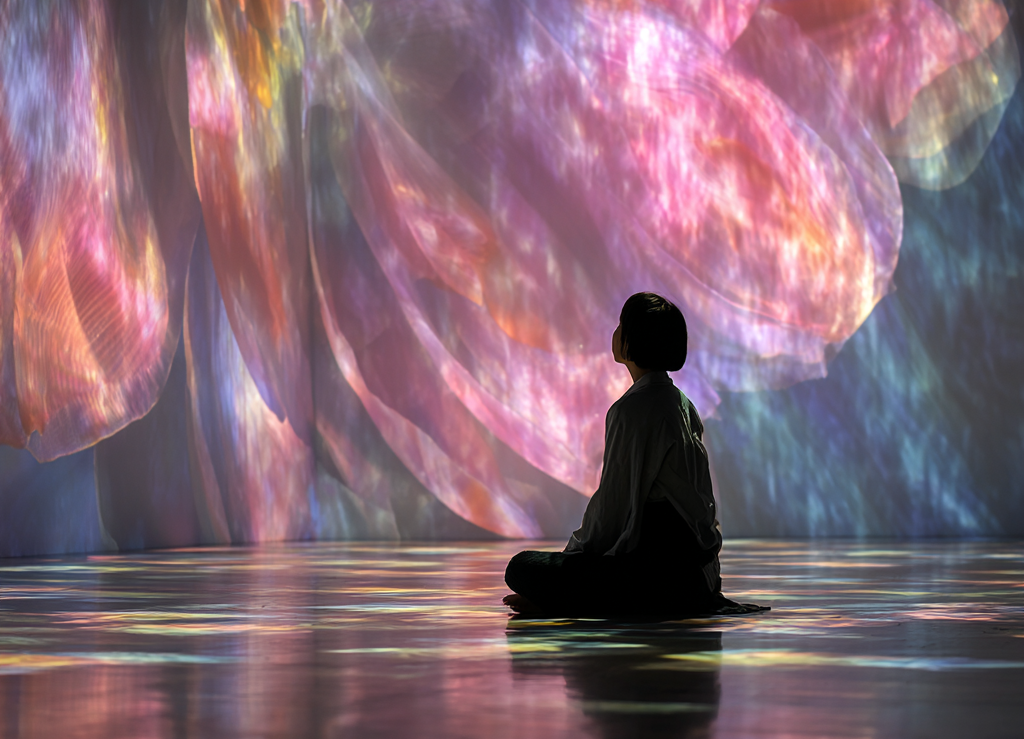
(AI-generated image created with Midjourney)
Exhibitions of Light and Sound for Meditation
In recent years, galleries across Europe and the United States have increasingly embraced meditation-focused exhibitions powered by media art. These experiences go beyond simply viewing artworks: the core value lies in allowing audiences to step inside immersive environments of light and sound, where they can actively engage in meditation.
This trend has accelerated in the aftermath of the COVID-19 pandemic, reflecting a growing cultural demand for experiences that combine “art + therapy” and address the rising interest in emotional wellness and recovery. One notable example is Berlin’s Silent Green Kulturquartier. Originally a crematorium, this venue has been transformed into a multidisciplinary cultural platform for experimental art and performance. In certain programs, the entire hall is enveloped by digital projections while ambient soundscapes fill the space. Visitors sit on the floor, closing their eyes or gazing at the visuals, guided through meditation sessions by trained facilitators.
In this process, media art functions not as a passive backdrop but as a catalyst for meditation. The flow of light guides breathing rhythms, while sound calms mental waves, allowing visitors to experience profound inner tranquility within an all-encompassing sensory environment. This illustrates how art can evolve beyond exhibition into a form of therapy in its own right.
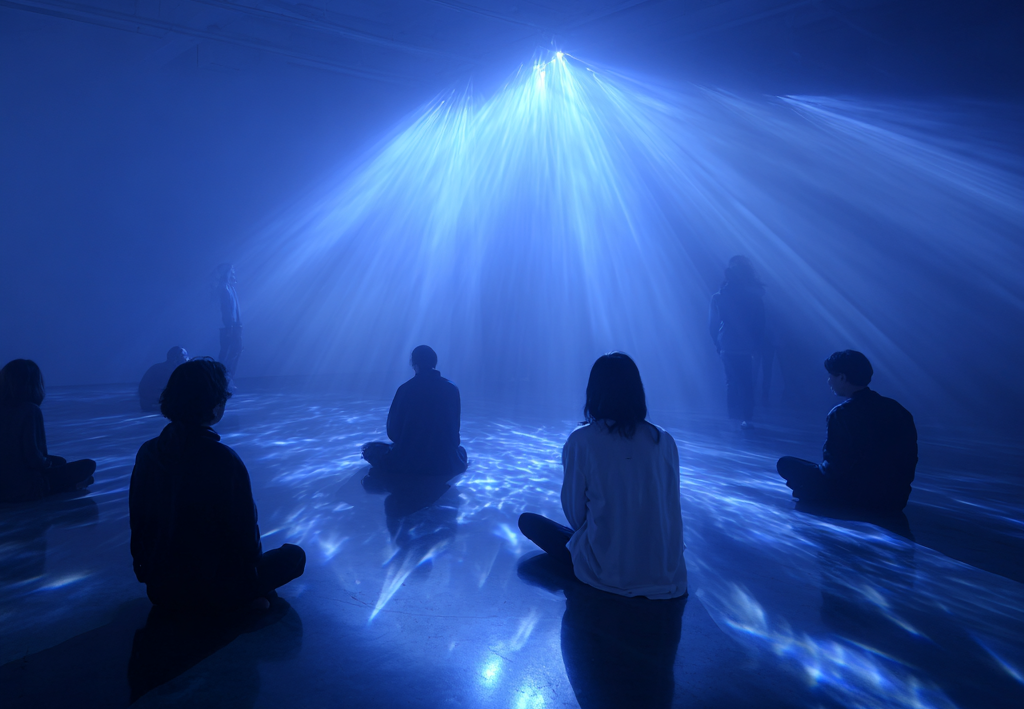
(AI-generated image created with Midjourney)
Digital Healing in Hospitals and Wellness Centers
Perhaps the most tangible applications of media art therapy can be found in medical institutions and wellness centers.
In several cancer treatment hospitals abroad, large digital art screens have been installed in lobbies and waiting rooms. These display natural landscapes such as forests, oceans, and skies, alongside abstract media art compositions. Patients and their families report that these works ease anxiety, reduce tension, and soften the sterile atmosphere of clinical spaces. Patient satisfaction surveys have recorded feedback such as: “Digital art helps me feel calmer” and “Waiting feels less tedious.”
A study at Chelsea & Westminster Hospital in the UK further demonstrated that visual art installations throughout hospital spaces improved patients’ mental health and enhanced their care experiences. These findings highlight how artistic interventions go far beyond decoration, serving as active contributors to emotional stability and recovery.
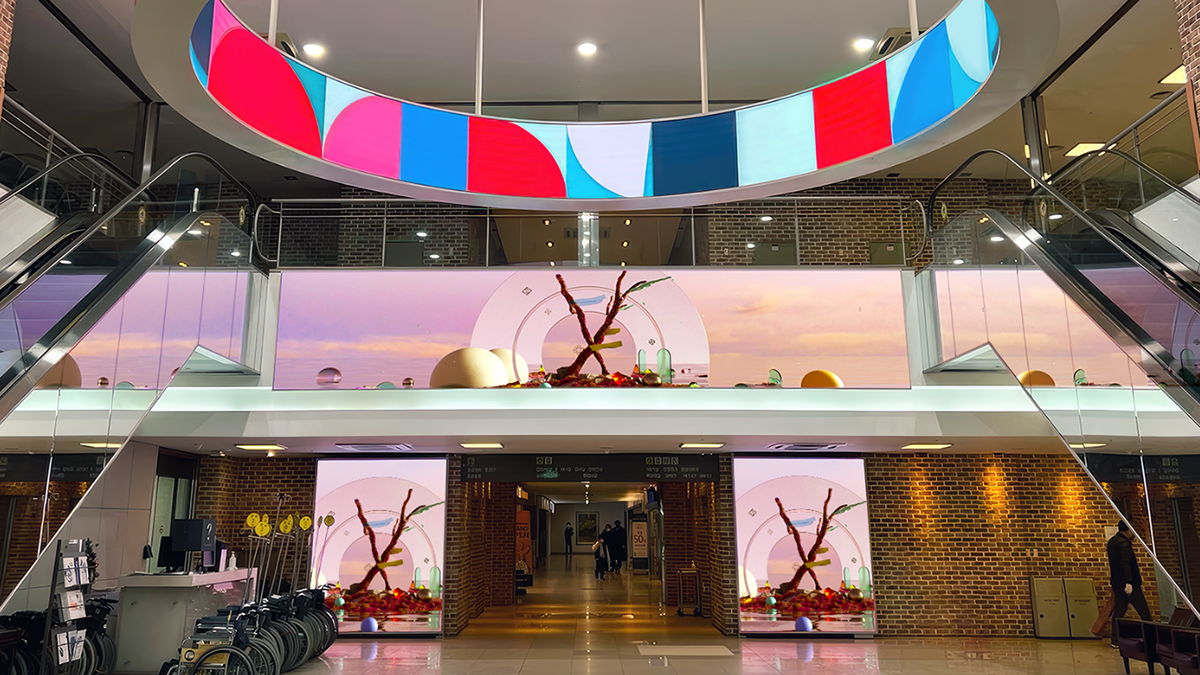
(Andong Hospital lobby media art, source: LED.ART website)
In South Korea, more hospitals are adopting digital media walls featuring curated media art. Blossoming flowers, gentle waves, and seasonal landscapes provide patients and visitors with moments of respite and comfort — not as mere ornamentation but as therapeutic encounters woven into the environment.
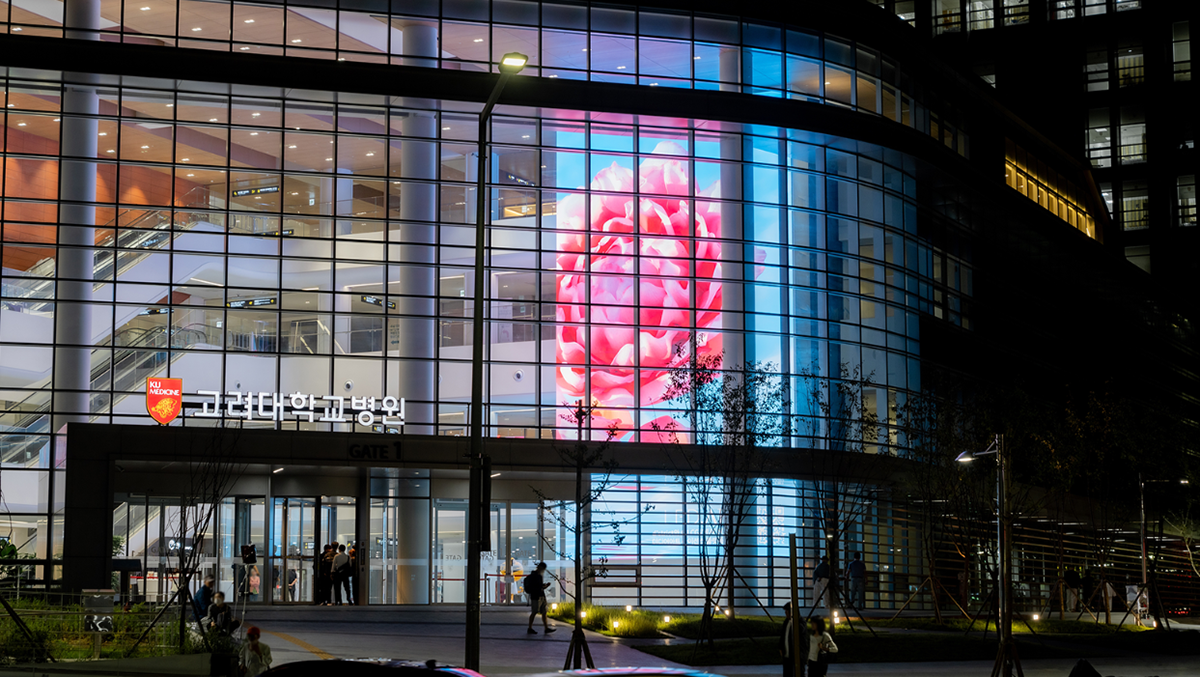
(Korea University Hospital lobby media art, source: LED.ART website)
The Meaning and Possibilities of Media Art Therapy
Media art is no longer confined to being just a “new visual technology.” In hospitals, wellness centers, public squares, and immersive exhibitions, it is increasingly embraced as a tool for emotional recovery, meditation, and psychological stability.
By merging light, sound, and digital technology, media artworks transform entire environments into sensory sanctuaries, offering spaces for reflection and inner balance. Looking forward, media art has the potential to grow beyond the role of aesthetic spectacle, becoming a form of art that cares for people’s hearts and restores the rhythm of our cities.
#mediaart #digitalart #fluidart #mediaartist #digitalartist #ledvideo #ledwall #leddisplay #ledinstallations #ledscreencontent #videolicense #high-qualityvideolicense #4Kdigitalart #artlicensing #artcuration



Media Art Therapy: When Art Becomes a Space of Healing
by LED.ART EDITORIAL
Moments of Meditation Shaped by Light, Sound, and Digital Art
Art has always carried the power to heal. From the earliest days of humanity, drawing, painting, and listening to music have been more than acts of appreciation — they have served as ways to release emotions and restore inner balance. Countless studies and experiences have proven art’s ability to support emotional regulation and mental well-being. Today, with the rise of new technologies, media art is inheriting and reinterpreting this healing function for a new era.
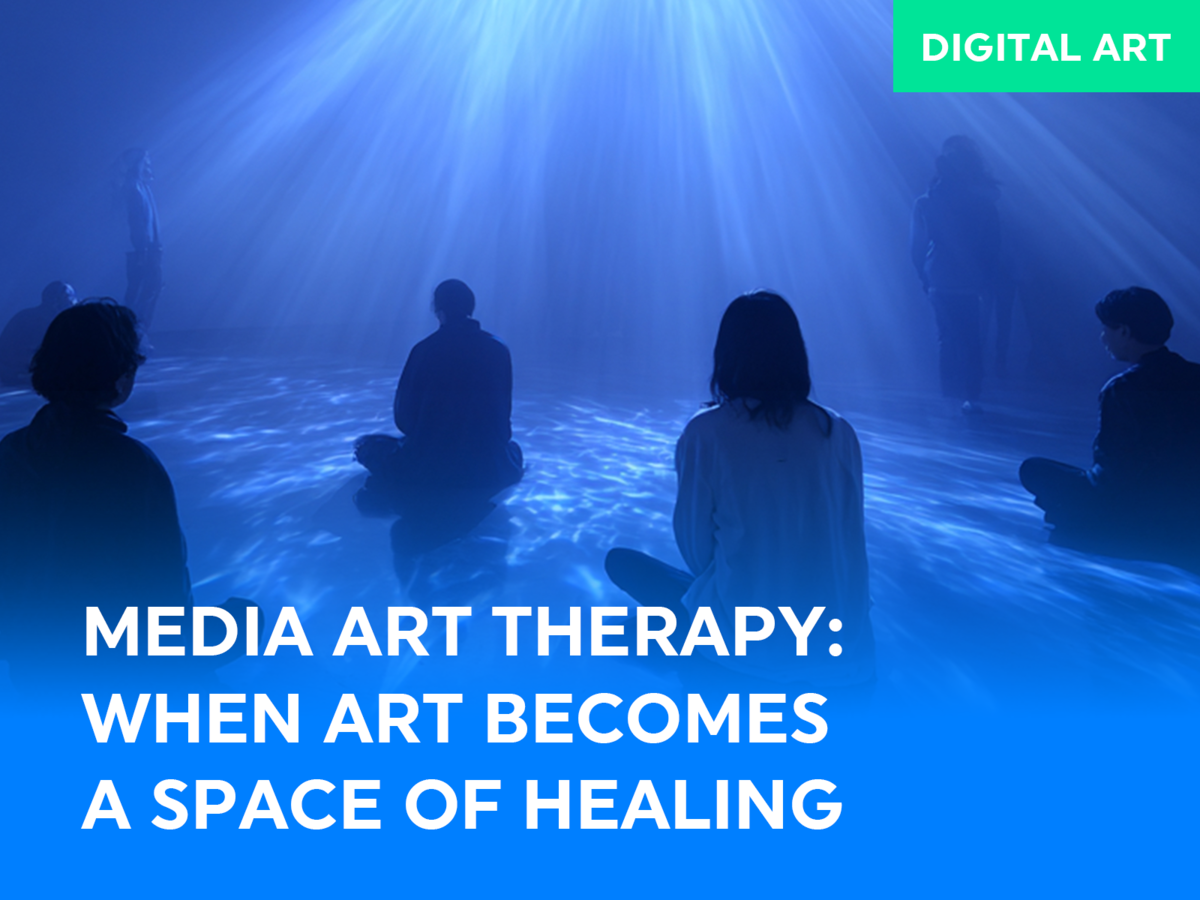
When light, sound, and digital imagery converge, media art can do more than offer visual stimulation — it can directly influence the viewer’s senses and psyche. Inside immersive exhibition spaces, visitors feel rhythms reminiscent of nature, perceive the passage of time, and release suppressed emotions. This process transcends mere observation, reaching into the realm of therapy.
(AI-generated image created with Midjourney)
Exhibitions of Light and Sound for Meditation
In recent years, galleries across Europe and the United States have increasingly embraced meditation-focused exhibitions powered by media art. These experiences go beyond simply viewing artworks: the core value lies in allowing audiences to step inside immersive environments of light and sound, where they can actively engage in meditation.
This trend has accelerated in the aftermath of the COVID-19 pandemic, reflecting a growing cultural demand for experiences that combine “art + therapy” and address the rising interest in emotional wellness and recovery. One notable example is Berlin’s Silent Green Kulturquartier. Originally a crematorium, this venue has been transformed into a multidisciplinary cultural platform for experimental art and performance. In certain programs, the entire hall is enveloped by digital projections while ambient soundscapes fill the space. Visitors sit on the floor, closing their eyes or gazing at the visuals, guided through meditation sessions by trained facilitators.
In this process, media art functions not as a passive backdrop but as a catalyst for meditation. The flow of light guides breathing rhythms, while sound calms mental waves, allowing visitors to experience profound inner tranquility within an all-encompassing sensory environment. This illustrates how art can evolve beyond exhibition into a form of therapy in its own right.
(AI-generated image created with Midjourney)
Digital Healing in Hospitals and Wellness Centers
Perhaps the most tangible applications of media art therapy can be found in medical institutions and wellness centers.
In several cancer treatment hospitals abroad, large digital art screens have been installed in lobbies and waiting rooms. These display natural landscapes such as forests, oceans, and skies, alongside abstract media art compositions. Patients and their families report that these works ease anxiety, reduce tension, and soften the sterile atmosphere of clinical spaces. Patient satisfaction surveys have recorded feedback such as: “Digital art helps me feel calmer” and “Waiting feels less tedious.”
A study at Chelsea & Westminster Hospital in the UK further demonstrated that visual art installations throughout hospital spaces improved patients’ mental health and enhanced their care experiences. These findings highlight how artistic interventions go far beyond decoration, serving as active contributors to emotional stability and recovery.
(Andong Hospital lobby media art, source: LED.ART website)
In South Korea, more hospitals are adopting digital media walls featuring curated media art. Blossoming flowers, gentle waves, and seasonal landscapes provide patients and visitors with moments of respite and comfort — not as mere ornamentation but as therapeutic encounters woven into the environment.
(Korea University Hospital lobby media art, source: LED.ART website)
The Meaning and Possibilities of Media Art Therapy
Media art is no longer confined to being just a “new visual technology.” In hospitals, wellness centers, public squares, and immersive exhibitions, it is increasingly embraced as a tool for emotional recovery, meditation, and psychological stability.
By merging light, sound, and digital technology, media artworks transform entire environments into sensory sanctuaries, offering spaces for reflection and inner balance. Looking forward, media art has the potential to grow beyond the role of aesthetic spectacle, becoming a form of art that cares for people’s hearts and restores the rhythm of our cities.
#mediaart #digitalart #fluidart #mediaartist #digitalartist #ledvideo #ledwall #leddisplay #ledinstallations #ledscreencontent #videolicense #high-qualityvideolicense #4Kdigitalart #artlicensing #artcuration