Screens That Shape the City : How Media Art Is Transforming Urban Spaces
by LED.ART EDITORIAL
Screens That Shape the City : How Media Art Is Transforming Urban Spaces
Urban Media Art Now: How Digital Displays Are Transforming Our Cities
by LED.ART EDITORIAL
A quiet transformation is unfolding in the cities we live in.
Architecture is becoming more transparent, spaces more adaptive, and brands more focused on crafting emotional experiences. At the center of this shift are digital displays—no longer mere surfaces, but expressive mediums expanding the visual identity of modern environments.
Once viewed as simple advertising boards, screens have evolved into sensitive aesthetic devices that define the rhythm, atmosphere, and character of contemporary urban life.
This essay explores why today's cities increasingly rely on media art, and how digital displays are reshaping the way we experience space.
1. Why Cities Need Media Art
Cities behave like living organisms. They shift, respond, and evolve through countless encounters between people, brands, and spaces. In such a dynamic environment, static architecture alone can no longer reflect the flux of urban life. Seasons change, cultural moments accumulate, new businesses emerge, and the roles of spaces evolve quickly. Digital visuals—flexible, responsive, and immediate—offer a way for cities to speak a living language.
Media art can:
Change the atmosphere of a space in an instant, reflect the time of day, season, or flow of people, express the identity and intentions of a brand or environment.
A single screen becomes not a device, but a visual interpreter of the city’s emotions and identity. In this sense, media art is no longer optional. It is becoming an essential component of modern environmental design.
2. How Global Landmarks Are Reinventing Themselves Through Digital Experiences
Across the world, major cities are redefining their landmarks through media art. From Shinjuku to Outernet London, from Times Square to Gangnam, digital displays are becoming the symbolic faces of their urban surroundings. These immense screens are not just visual spectacles—they shape cultural memory.
One well-crafted visual moment can become the signature image of an entire district. People take photos, share them online, and connect the memory of the city with the content displayed.
This is why services like LED.ART are powerful today: In a world where digital moments define physical places, curated media art becomes a form of urban identity-making.
3. When Architecture and Displays Meet: A New Aesthetic Emerges
Another reason media art is essential is the deepening bond between architecture and digital displays. In the past, buildings “accommodated” screens. Today, architecture and screens are designed together, with the focus on crafting complete experiences.
Lobby walls reshape spatial volume through flowing motion, façades transform into interactive canvases, corridors, ceilings, and transition spaces come alive with light.
Materials, light, and movement intertwine, creating a new category we can call architectural media art. As displays grow thinner, wider, and more flexible, they integrate seamlessly with columns, curves, heights, and circulation paths. This fusion turns spaces from something simply seen into something deeply felt.
4. How Media Art Transforms Everyday Interior Spaces
Media art is no longer limited to iconic outdoor displays. Hotel lobbies, office lounges, retail environments, hospitals, and public facilities all increasingly depend on digital visuals.
Why? Because the quality of spatial experience is now inseparable from the quality of the brand. In hotels, media art conveys personality and atmosphere, in offices, it influences the mood of employees and visitors, in retail spaces, it designs the emotional journey of customers, in public venues, it defines the image and sensibility of the city.
Even a single moment shapes the holistic experience of a place. Media art is the fastest and most intuitive way to shift a space’s value and emotional tone.
5. Branding Is Now Completed Through Motion
Brands increasingly rely on media art for a simple reason: Static graphics can no longer capture the depth of a brand’s worldview. People remember what moves. They respond emotionally to transitions of light. They feel immersed in time-based visual storytelling. Branding is no longer about a symbol; it is about how that symbol lives and breathes in motion.
Businesses use spatial media art to express their character, magnify their narrative, and create memorable scenes for their visitors. This is why LED.ART creates tailored digital art for spaces—it is through movement and light that brands can finally express themselves fully.
6. In the Age of AI, Real-Time Content Creates a New Urban Language
AI is pushing urban media art into a new era. Real-time data-driven visuals, weather-responsive or time-adaptive screens, interactive digital environments reacting to people and space, automatically generated and distributed city-scale content.
We are moving beyond simple playback.Screens now behave as if the city itself is responding—alive, aware, and evolving. AI is making displays more adaptive, more intelligent, and more emotionally resonant. This shift is transforming how people experience urban environments at their core.
7. We Are Standing at the Center of This Transformation
Digital screens are not just technological objects. They are the new language of space—a blend of identity, emotion, brand expression, and urban culture. With LED.ART, our mission is not simply to install media walls or deliver content.
We strive to: redefine the landscapes of cities, extend the narrative of brands, and shape emotional experiences for the people who move through these spaces.
Urban screens continue to write new stories every day. And we stand at the heart of this evolution— crafting the next generation of urban experiences through the language of light and motion.


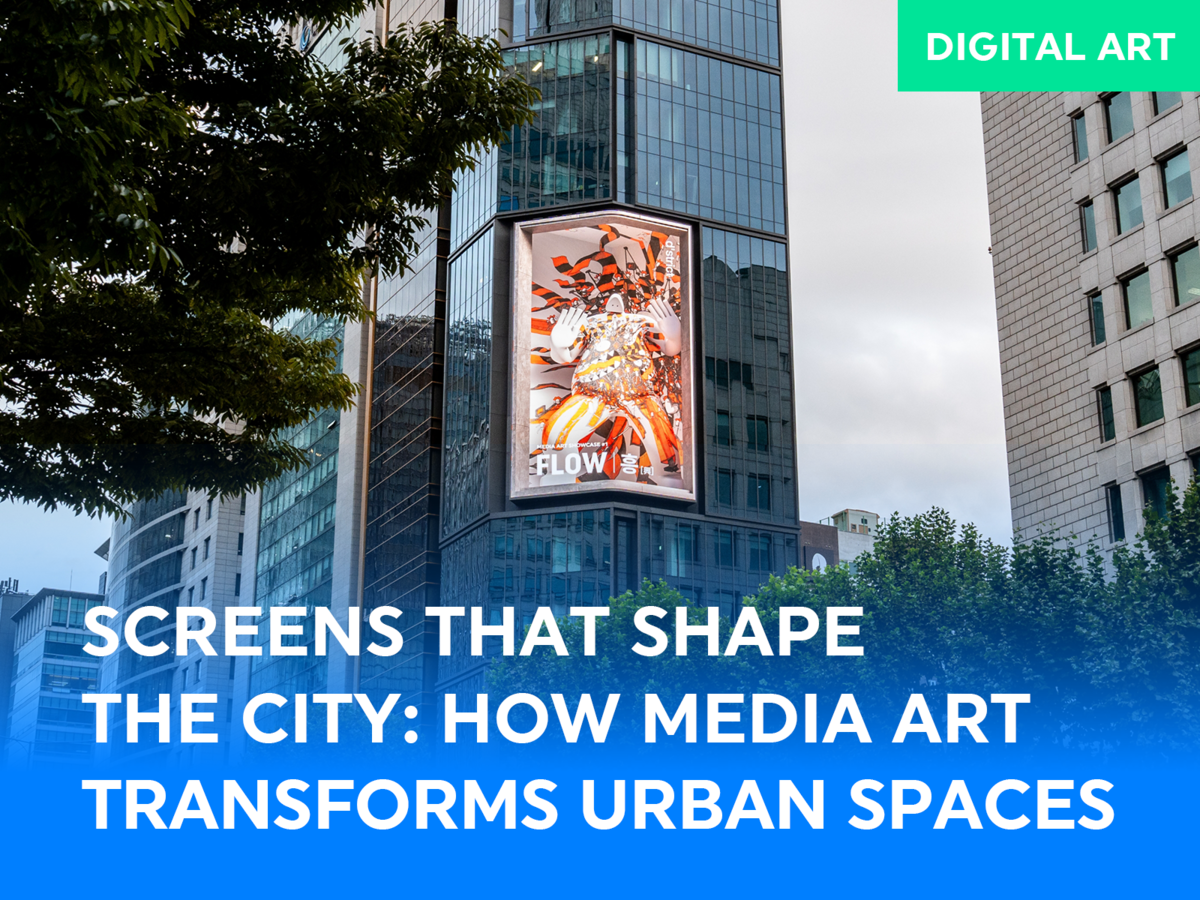

Screens That Shape the City
: How Media Art Is Transforming Urban Spaces
Urban Media Art Now: How Digital Displays Are Transforming Our Cities
by LED.ART EDITORIAL
A quiet transformation is unfolding in the cities we live in.
Architecture is becoming more transparent, spaces more adaptive, and brands more focused on crafting emotional experiences. At the center of this shift are digital displays—no longer mere surfaces, but expressive mediums expanding the visual identity of modern environments.
Once viewed as simple advertising boards, screens have evolved into sensitive aesthetic devices that define the rhythm, atmosphere, and character of contemporary urban life.
This essay explores why today's cities increasingly rely on media art, and how digital displays are reshaping the way we experience space.
1. Why Cities Need Media Art
Cities behave like living organisms. They shift, respond, and evolve through countless encounters between people, brands, and spaces. In such a dynamic environment, static architecture alone can no longer reflect the flux of urban life. Seasons change, cultural moments accumulate, new businesses emerge, and the roles of spaces evolve quickly. Digital visuals—flexible, responsive, and immediate—offer a way for cities to speak a living language.
Media art can:
Change the atmosphere of a space in an instant, reflect the time of day, season, or flow of people, express the identity and intentions of a brand or environment.
A single screen becomes not a device, but a visual interpreter of the city’s emotions and identity. In this sense, media art is no longer optional. It is becoming an essential component of modern environmental design.
2. How Global Landmarks Are Reinventing Themselves Through Digital Experiences
Across the world, major cities are redefining their landmarks through media art. From Shinjuku to Outernet London, from Times Square to Gangnam, digital displays are becoming the symbolic faces of their urban surroundings. These immense screens are not just visual spectacles—they shape cultural memory.
One well-crafted visual moment can become the signature image of an entire district. People take photos, share them online, and connect the memory of the city with the content displayed.
This is why services like LED.ART are powerful today: In a world where digital moments define physical places, curated media art becomes a form of urban identity-making.
3. When Architecture and Displays Meet: A New Aesthetic Emerges
Another reason media art is essential is the deepening bond between architecture and digital displays. In the past, buildings “accommodated” screens. Today, architecture and screens are designed together, with the focus on crafting complete experiences.
Lobby walls reshape spatial volume through flowing motion, façades transform into interactive canvases, corridors, ceilings, and transition spaces come alive with light.
Materials, light, and movement intertwine, creating a new category we can call architectural media art. As displays grow thinner, wider, and more flexible, they integrate seamlessly with columns, curves, heights, and circulation paths. This fusion turns spaces from something simply seen into something deeply felt.
4. How Media Art Transforms Everyday Interior Spaces
Media art is no longer limited to iconic outdoor displays. Hotel lobbies, office lounges, retail environments, hospitals, and public facilities all increasingly depend on digital visuals.
Why? Because the quality of spatial experience is now inseparable from the quality of the brand. In hotels, media art conveys personality and atmosphere, in offices, it influences the mood of employees and visitors, in retail spaces, it designs the emotional journey of customers, in public venues, it defines the image and sensibility of the city.
Even a single moment shapes the holistic experience of a place. Media art is the fastest and most intuitive way to shift a space’s value and emotional tone.
5. Branding Is Now Completed Through Motion
Brands increasingly rely on media art for a simple reason: Static graphics can no longer capture the depth of a brand’s worldview. People remember what moves. They respond emotionally to transitions of light. They feel immersed in time-based visual storytelling. Branding is no longer about a symbol; it is about how that symbol lives and breathes in motion.
Businesses use spatial media art to express their character, magnify their narrative, and create memorable scenes for their visitors. This is why LED.ART creates tailored digital art for spaces—it is through movement and light that brands can finally express themselves fully.
6. In the Age of AI, Real-Time Content Creates a New Urban Language
AI is pushing urban media art into a new era. Real-time data-driven visuals, weather-responsive or time-adaptive screens, interactive digital environments reacting to people and space, automatically generated and distributed city-scale content.
We are moving beyond simple playback.Screens now behave as if the city itself is responding—alive, aware, and evolving. AI is making displays more adaptive, more intelligent, and more emotionally resonant. This shift is transforming how people experience urban environments at their core.
7. We Are Standing at the Center of This Transformation
Digital screens are not just technological objects. They are the new language of space—a blend of identity, emotion, brand expression, and urban culture. With LED.ART, our mission is not simply to install media walls or deliver content.
We strive to: redefine the landscapes of cities, extend the narrative of brands, and shape emotional experiences for the people who move through these spaces.
Urban screens continue to write new stories every day. And we stand at the heart of this evolution— crafting the next generation of urban experiences through the language of light and motion.