Time Written in Light: Revisiting 50 Years of Media Art
by LED.ART Editorial
When did our cities become so bright?
As we walk through urban streets, the glow of building façades, the flowing visuals in hotel lobbies, and the digital walls in public spaces feel like a natural part of our surroundings. Yet this seamless presence of light and motion did not emerge overnight. What we now call “media art” is the result of decades of experimentation, technological evolution, and a long conversation about what art can be.
This essay is not an attempt to recap every chapter of media art history. Instead, it seeks to understand why media art matters so deeply to today’s spaces and cities—and why digital displays have become one of the most significant visual languages of our time. At the heart of this journey lies a single element: light.
1. When Screens Became Art
In the early 1970s, artists began to look at TV monitors differently.
Screens were still bulky, fragile, and technically limiting. Real-time editing was difficult, and the hardware often malfunctioned. But within these constraints, a new imagination began to unfold. Instead of seeing the screen as a device for broadcasting information, artists saw it as a canvas of moving light.
Nam June Paik symbolized this shift. He found aesthetics in distorted signals, in drifting dots of light, in rhythmic patterns created by electronic interference. What he demonstrated was not simply that “video can be art,” but that art can reinterpret technology in a completely new way.
From that moment, the screen was no longer a passive surface. It became an artistic space shaped by time, where imagery was not fixed but continually evolving. Art was no longer confined to static materials—it began to breathe and move.
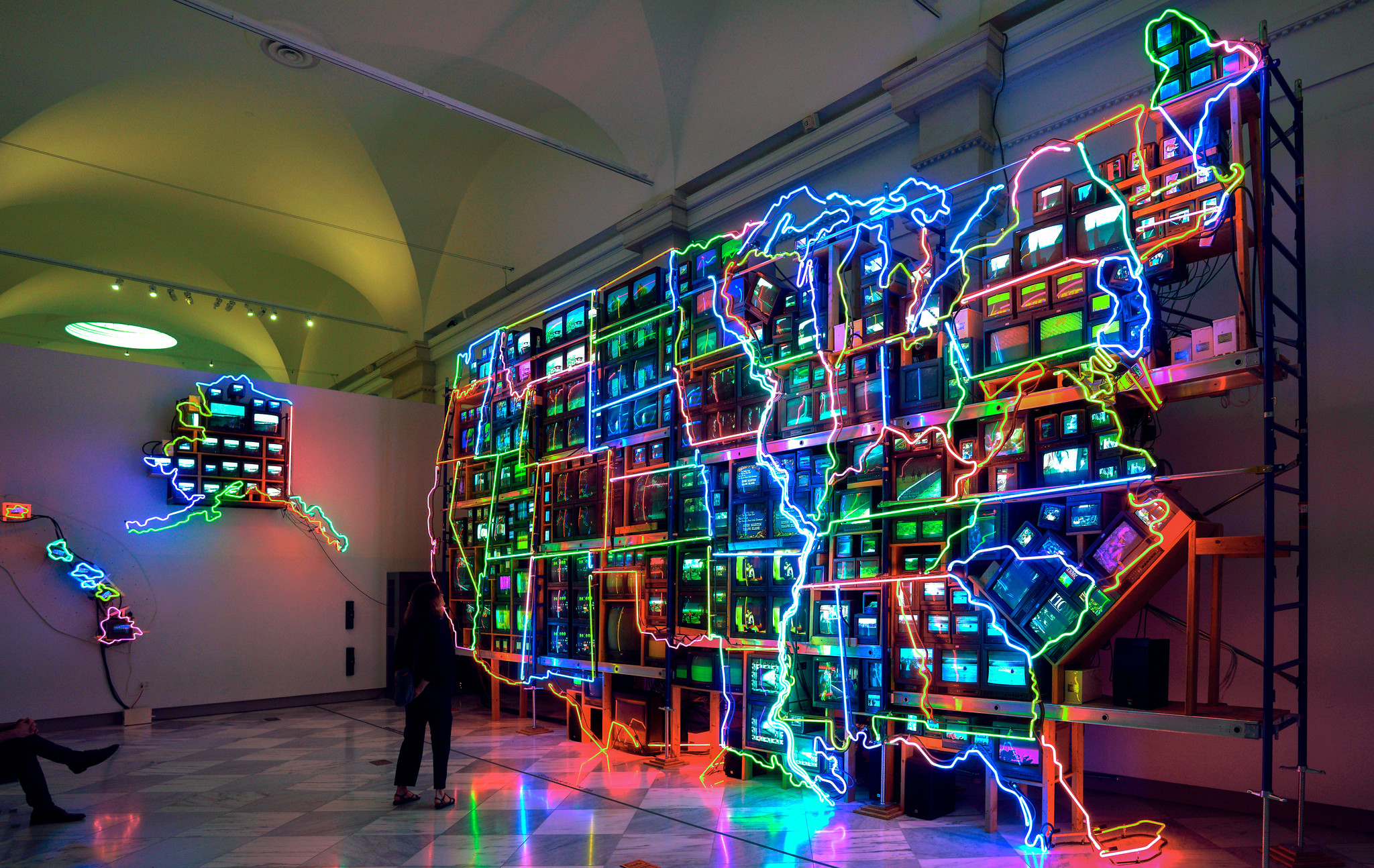
Nam June Paik, Electronic Superhighway, Smithsonian American Art Museum, Gift of the artist© Nam June Paik Estate
2. The Aesthetics Shaped by Technology
As time passed, technology advanced rapidly. The bulky CRT became a sleek digital panel; projection mapping emerged; computer graphics and real-time rendering opened new creative vocabularies. Technology didn’t merely support artistic ideas—it expanded the very aesthetics available to artists.
Today’s LED displays are not just backdrops. They are structural components of the artwork itself. Higher resolutions, richer color expression, and architectural scale have turned digital surfaces into dynamic environments.
We now live in an era where the texture of light, the speed of motion, and the subtle blur of color can all be deliberately crafted. This is one of the defining characteristics of contemporary media art.
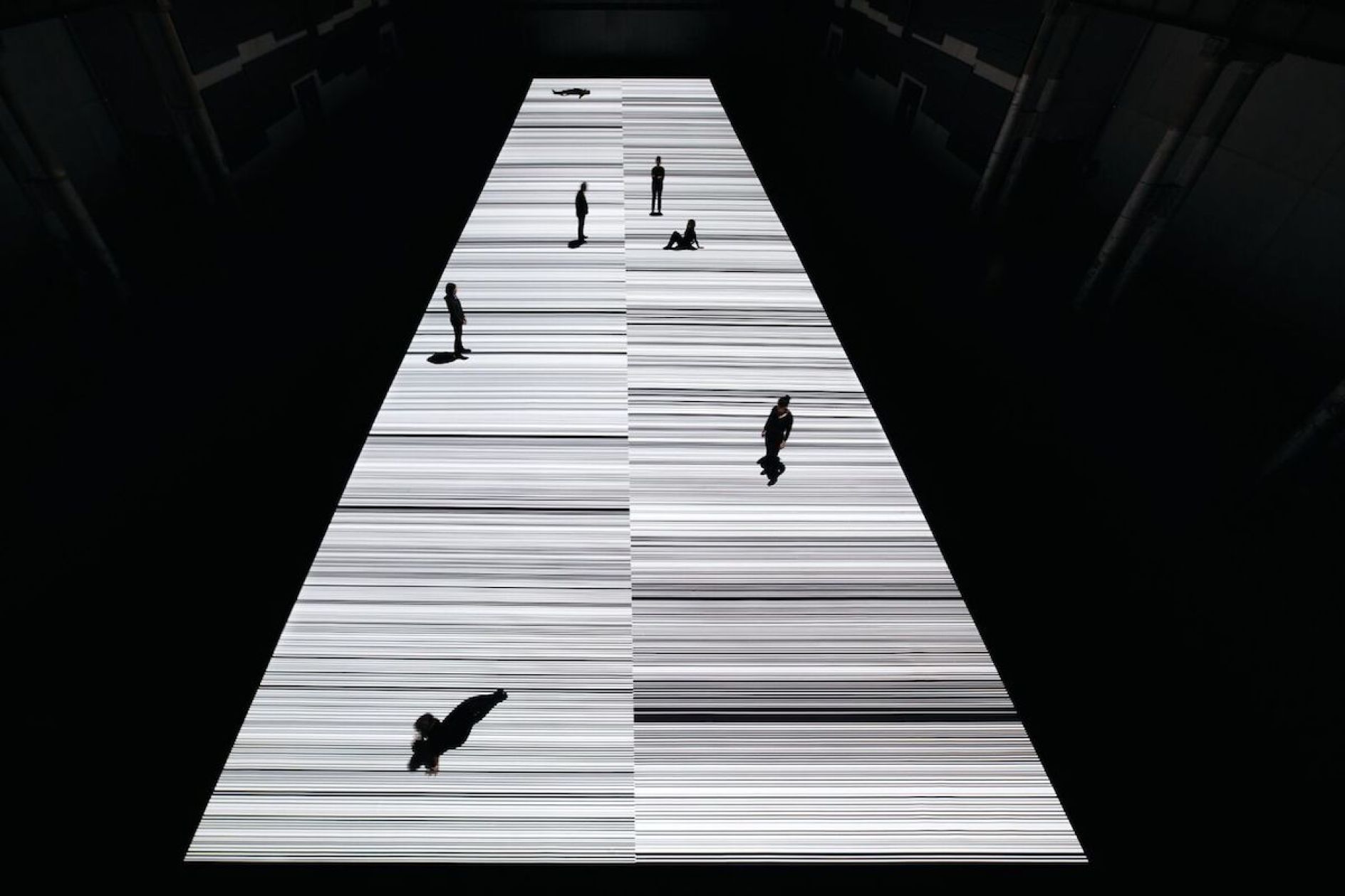
Ryoji Ikeda, test pattern [N-5], audiovisual installation, 2013 © Ryoji Ikeda
3. When Cities and Architecture Became Canvases
As technology evolved, the location of media art also changed.
It moved beyond museums and galleries, spreading into architecture, retail, transit spaces, and public environments. Building façades, lobby ceilings, subway corridors, and outdoor plazas became new sites for artistic expression.
In the rhythm of the city, media art is no longer mere decoration. It shapes the identity and atmosphere of a space. The city’s glow becomes not information overload, but a visual language that defines how spaces feel and function.
It is within this expanded landscape that services like LED.ART find their significance. Curated digital art for specific spaces is not simply content delivery—it is the design of urban experience.
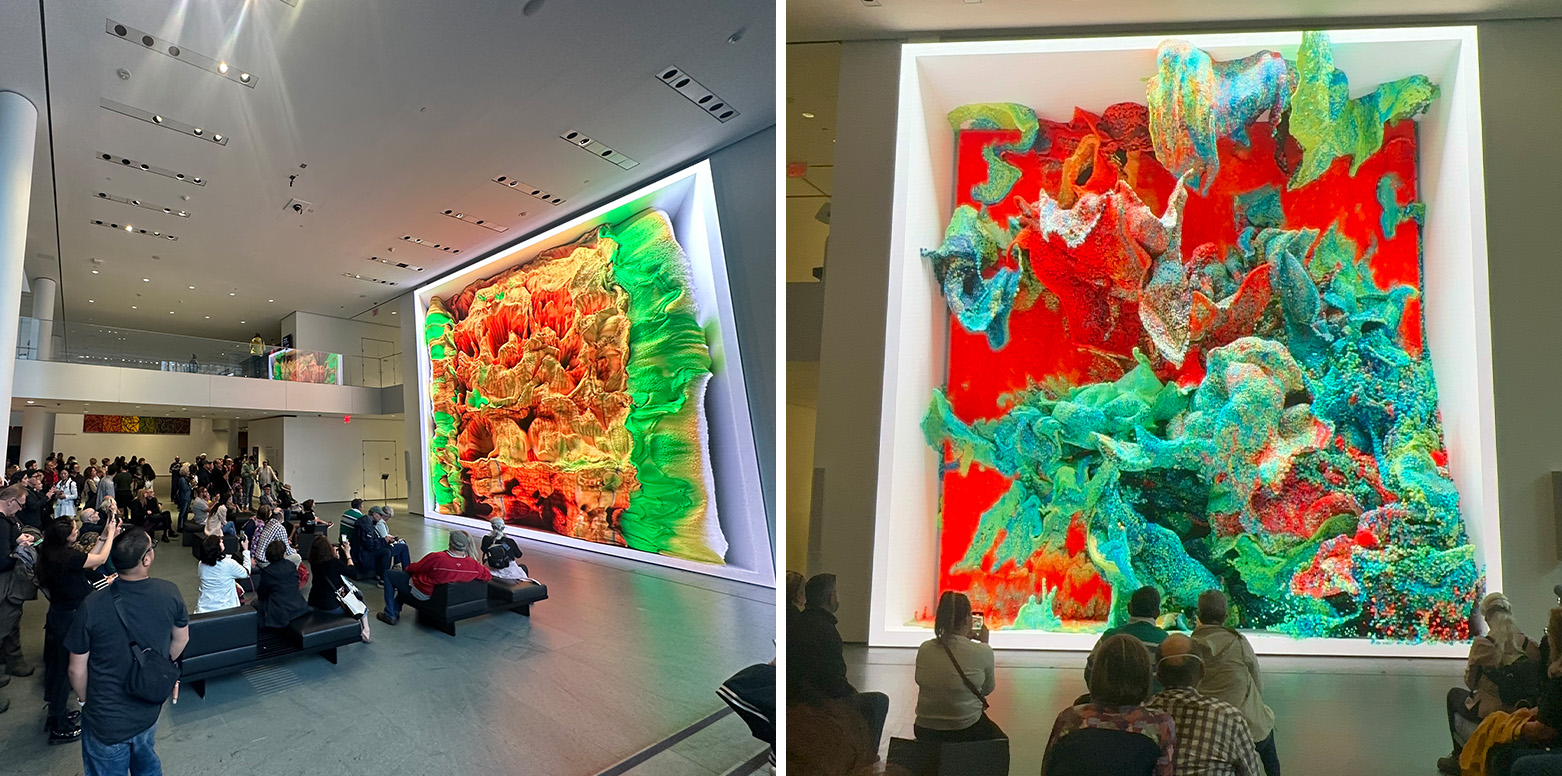
Unsupervised by Epik Anadol, MoMA @Juhee Choi
4. After AI: Where We Stand Now
In recent years, AI has accelerated the evolution of media art once again.
From generative imagery to real-time data visualizations, algorithmic animation, and interactive systems, AI offers new tools while reshaping the boundaries of creation itself.
Media art today is not just “art using media.” It is an ecosystem where technology, architecture, space, and human experience converge.
LED screens have become more than objects. They are living interfaces, connecting data with emotion, brands with cities, and individuals with immersive environments. AI is making these interfaces more adaptive, intelligent, and expressive.
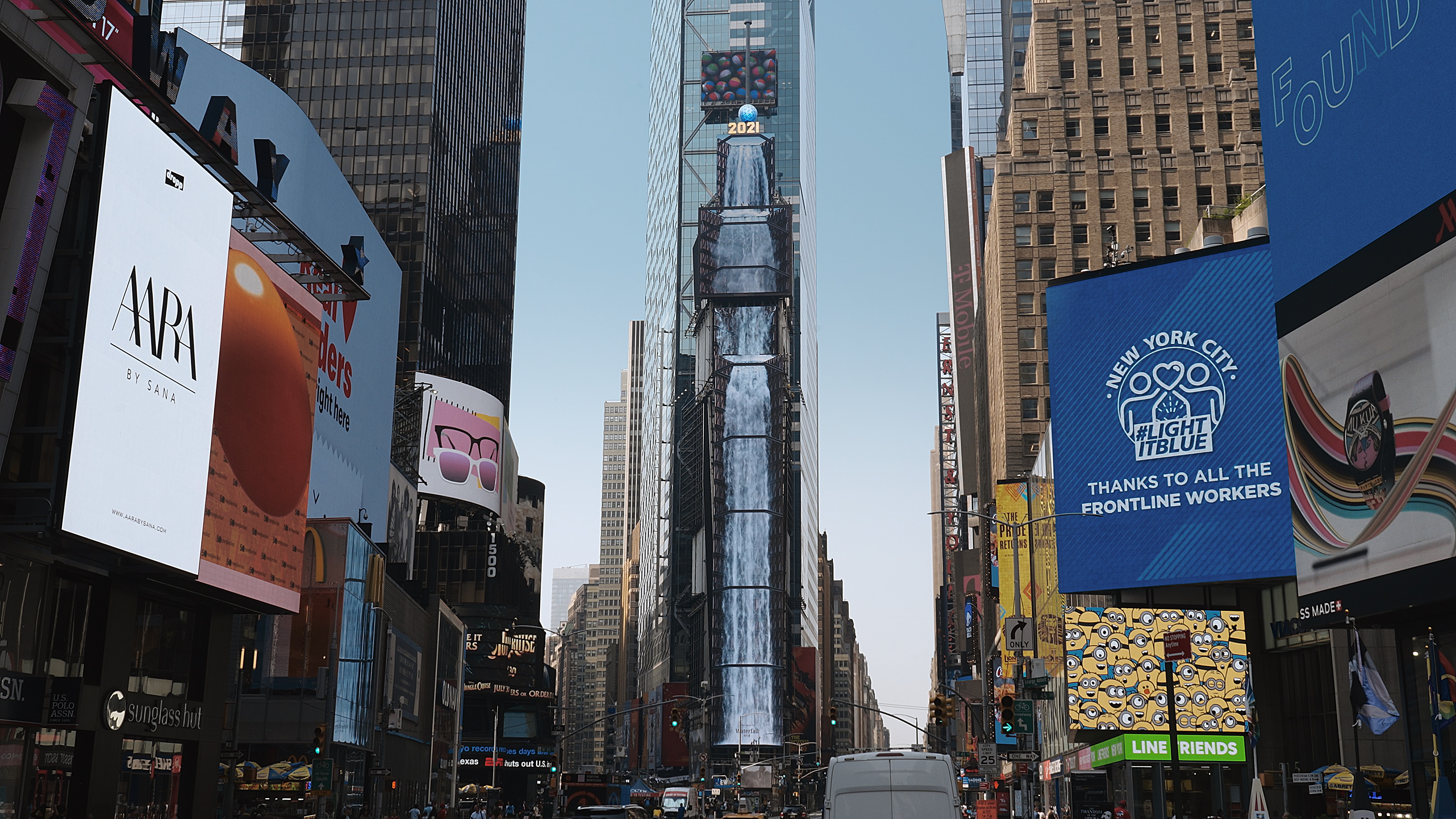
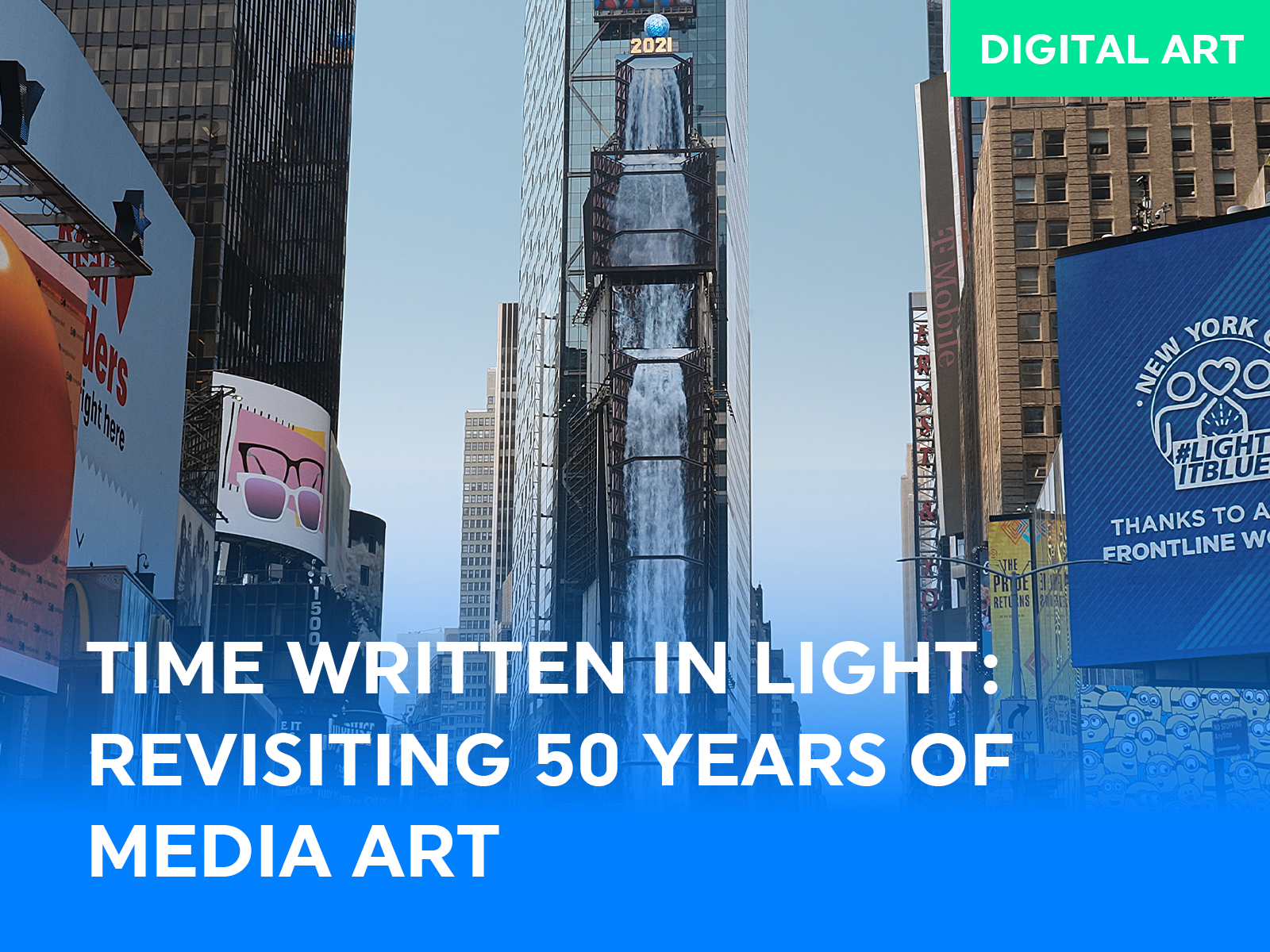
WATERFALL, Time Square @d'strict
5. Standing on a Timeline Written in Light
The media art we see today is not the product of modern technology alone. It stands on a lineage of artists who saw potential in electric light, who experimented with constraints, who reimagined what art could mean in changing times.
Urban media art is, in many ways, time written in light— a shared narrative created by artists, engineers, architects, and audiences.
Every artwork curated by LED.ART is part of this ongoing timeline. We are not simply placing screens in spaces. We are rewriting the emotional and experiential identity of modern environments.
The next generation of media art will emerge from within our daily lives, just as it always has—quietly, imaginatively, through the shifting language of light.
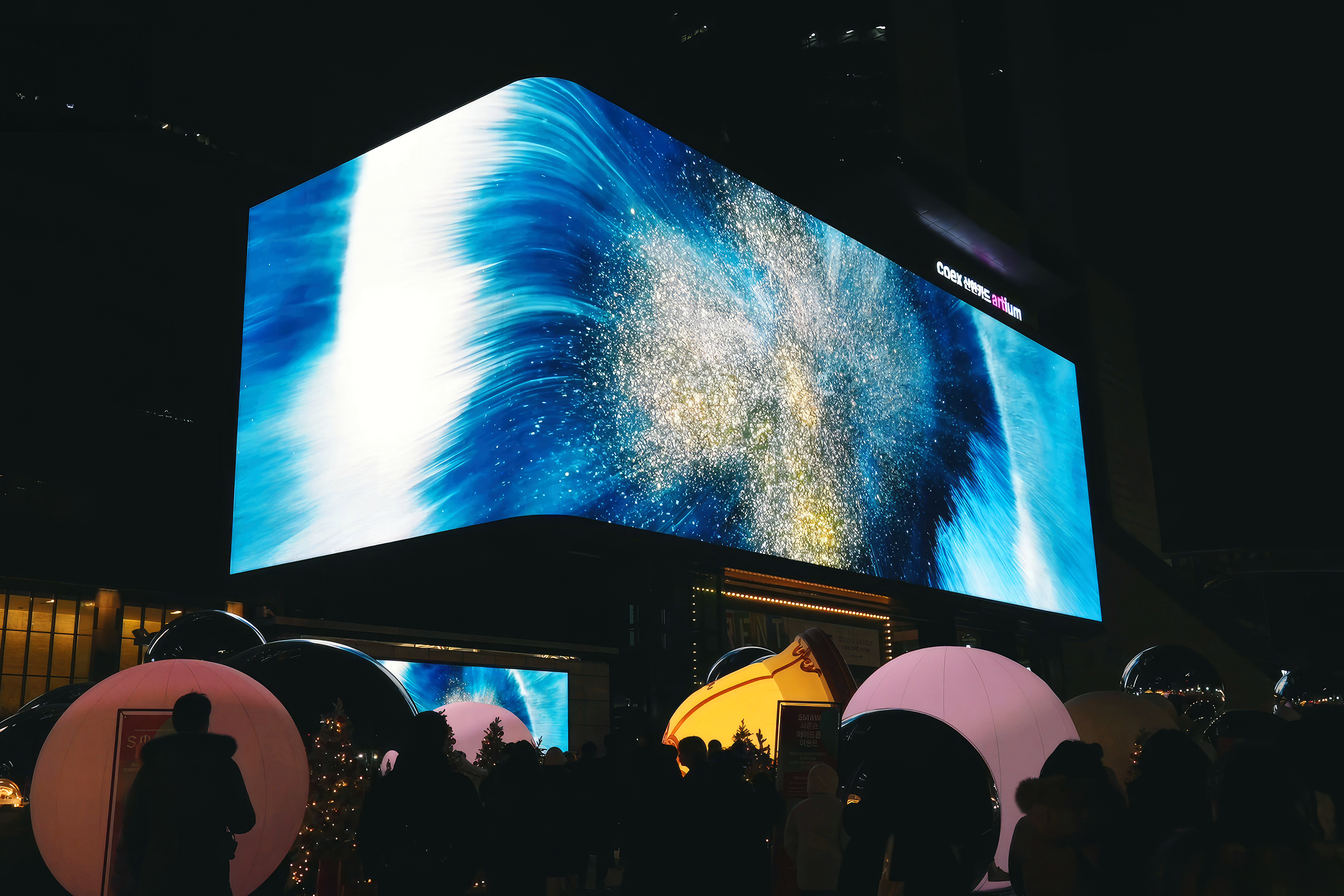
SMAW(Seoul Media Art Week), K-pop Square @led.art



Time Written in Light: Revisiting 50 Years of Media Art
by LED.ART Editorial
When did our cities become so bright?
As we walk through urban streets, the glow of building façades, the flowing visuals in hotel lobbies, and the digital walls in public spaces feel like a natural part of our surroundings. Yet this seamless presence of light and motion did not emerge overnight. What we now call “media art” is the result of decades of experimentation, technological evolution, and a long conversation about what art can be.
This essay is not an attempt to recap every chapter of media art history. Instead, it seeks to understand why media art matters so deeply to today’s spaces and cities—and why digital displays have become one of the most significant visual languages of our time. At the heart of this journey lies a single element: light.
1. When Screens Became Art
In the early 1970s, artists began to look at TV monitors differently.
Screens were still bulky, fragile, and technically limiting. Real-time editing was difficult, and the hardware often malfunctioned. But within these constraints, a new imagination began to unfold. Instead of seeing the screen as a device for broadcasting information, artists saw it as a canvas of moving light.
Nam June Paik symbolized this shift. He found aesthetics in distorted signals, in drifting dots of light, in rhythmic patterns created by electronic interference. What he demonstrated was not simply that “video can be art,” but that art can reinterpret technology in a completely new way.
From that moment, the screen was no longer a passive surface. It became an artistic space shaped by time, where imagery was not fixed but continually evolving. Art was no longer confined to static materials—it began to breathe and move.
Nam June Paik, Electronic Superhighway, Smithsonian American Art Museum, Gift of the artist© Nam June Paik Estate
2. The Aesthetics Shaped by Technology
As time passed, technology advanced rapidly. The bulky CRT became a sleek digital panel; projection mapping emerged; computer graphics and real-time rendering opened new creative vocabularies. Technology didn’t merely support artistic ideas—it expanded the very aesthetics available to artists.
Today’s LED displays are not just backdrops. They are structural components of the artwork itself. Higher resolutions, richer color expression, and architectural scale have turned digital surfaces into dynamic environments.
We now live in an era where the texture of light, the speed of motion, and the subtle blur of color can all be deliberately crafted. This is one of the defining characteristics of contemporary media art.
Ryoji Ikeda, test pattern [N-5], audiovisual installation, 2013 © Ryoji Ikeda
3. When Cities and Architecture Became Canvases
As technology evolved, the location of media art also changed.
It moved beyond museums and galleries, spreading into architecture, retail, transit spaces, and public environments. Building façades, lobby ceilings, subway corridors, and outdoor plazas became new sites for artistic expression.
In the rhythm of the city, media art is no longer mere decoration. It shapes the identity and atmosphere of a space. The city’s glow becomes not information overload, but a visual language that defines how spaces feel and function.
It is within this expanded landscape that services like LED.ART find their significance. Curated digital art for specific spaces is not simply content delivery—it is the design of urban experience.
Unsupervised by Epik Anadol, MoMA @Juhee Choi
4. After AI: Where We Stand Now
In recent years, AI has accelerated the evolution of media art once again.
From generative imagery to real-time data visualizations, algorithmic animation, and interactive systems, AI offers new tools while reshaping the boundaries of creation itself.
Media art today is not just “art using media.” It is an ecosystem where technology, architecture, space, and human experience converge.
LED screens have become more than objects. They are living interfaces, connecting data with emotion, brands with cities, and individuals with immersive environments. AI is making these interfaces more adaptive, intelligent, and expressive.
WATERFALL, Time Square @d'strict
5. Standing on a Timeline Written in Light
The media art we see today is not the product of modern technology alone. It stands on a lineage of artists who saw potential in electric light, who experimented with constraints, who reimagined what art could mean in changing times.
Urban media art is, in many ways, time written in light— a shared narrative created by artists, engineers, architects, and audiences.
Every artwork curated by LED.ART is part of this ongoing timeline. We are not simply placing screens in spaces. We are rewriting the emotional and experiential identity of modern environments.
The next generation of media art will emerge from within our daily lives, just as it always has—quietly, imaginatively, through the shifting language of light.
SMAW(Seoul Media Art Week), K-pop Square @led.art